The Piast Trail is the oldest cultural tourism route in Poland. It’s a place where you can experience a thousand years of history, feel the vibe of a life in a medieval stronghold and see where Poland “began”. Although the trail has existed for 40 years, you can still discover something new every time you visit it! It turns out that the history can be truly fascinating. Mysterious hillforts, majestic stone ruins as well as fabulous medieval churches create an extraordinary climate of travel in time.
The beginnings of Polish history are intrinsically linked to the Piast dynasty. In the 10th century, the members of this dynasty laid the foundations of the state and ruled it for the next 400 years. The Piasts had their roots in Greater Poland, which was the center of their power, and in the following centuries, played an extremely important role as the place of royal coronations and burials of kings. The Piast Trail reveals the answers to fascinating questions from Poland’s past. Here, you’ll find out, among others, where Mieszko lived, how Bolesław the Brave received his crown, how the white eagle became the country’s coat of arms, and why mighty Casimir the Great had to flee through secret tunnels.

Where to start?
The Piast Trail has two routes: north – south (from Wągrowiec to Kalisz) and east – west (from Kowal to Lubin). Their intersection is located in Gniezno – the central point of the entire trail. You have an opportunity to visit as many as 33 cities and towns along the way.
So, what can you see on the trail? Let’s begin in Gniezno, where the two routes cross. From the distance you can spot the thousand-year-old Cathedral of the Assumption of the Blessed Virgin Mary. This is the site of the coronation of five Polish kings, as well as the resting place of Saint Adalbert, the first saint associated with Poland (also the state’s patron). You can’t miss seeing the famous Gniezno Doors, which are a unique relic of Romanesque art.

If you’re planning a longer visit to Gniezno, make sure you explore the whole city. Don’t worry, the Royal Route will guide you to all the most interesting places. You can use Chase the Rabbit! app or printed brochures from the Tourist Information Center. Along the route, your guides will be small rabbit figurines hidden in various spots in the city – each one tells a different story. Can you find them all?
A perfect ending and a summary to your visit will be the Museum of the Origins of the Polish State, featuring a multimedia exhibition.
A good idea is a visit to the Open-Air Miniature Museum of the Piast Trail in Pobiedziska before you start your trip. You’ll find there all the famous buildings from times of the Piast dynasty (and even more landmarks of Greater Poland) on a scale 1:20.
Must-see classics
Halfway between Poznań and Gniezno, in the town of Dziekanowice, Ostrów Lednicki is located, often referred to as the „Island of rulers”. During the time of the first Piast dynasty, one of the most powerful strongholds stood there. Today, the impressive ruins remain, and the Museum of the First Piasts at Lednica has custody of it. In the past, the massive oak-log bridges led to the island. Now, tourists need to be transported there by ferry.
The museum also includes two other strongholds from that period, Giecz and Grzybowo, which belonged to the most powerful strongholds in the Polish lands during the reign of the Piasts.


Going further east, we reach Poznań, the capital of Greater Poland. The city offers a lot of attractions, but a good place to start is the Poznań Cathedral. It was the seat of the first Polish bishop and later became the burial place of the Piast rulers. Nearby, the Gothic church stands, which was built on the site of Mieszko’s stone palatium and the first Christian chapel in Poland. Today, the outline of the building is emphasized by an illuminated installation at night.
However, it’s best to start your tour with a visit to the ultra-modern Poznań Gate, where a multimedia and interactive exhibition presents ten centuries of history of Ostrów Tumski and Poznań. Traveling the Piast Trail, you’ll also come across the reconstructed Royal Castle. There, you can learn how the personal coat of arms of Przemysł II, a crowned white eagle, became the symbol of Poland. The castle also offers an added attraction: fantastic views of the city!
Discover something new!
South of Poznań lies Lubiń, which boasts a Romanesque-Gothic basilica and a Benedictine monastery. According to tradition, the chronicler Gallus Anonymus was associated with this monastery. Today, most attention is drawn to Benedyktynka (Bénédictine) – a herbal liqueur produced by the monks.
The eastern part of Greater Poland is also rich in Piast-period attractions. In Konin, the milestone from 1151 is situated, the oldest road sign in this part of Europe. Kalisz, believed by tradition to be an ancient stronghold, invites visitors to the Zawodzie Archaeological Park, where you can explore the reconstruction of the medieval stronghold and the remains of other medieval buildings. Visiting Kalisz, don’t forget to try the delicious Kalisz andruts!
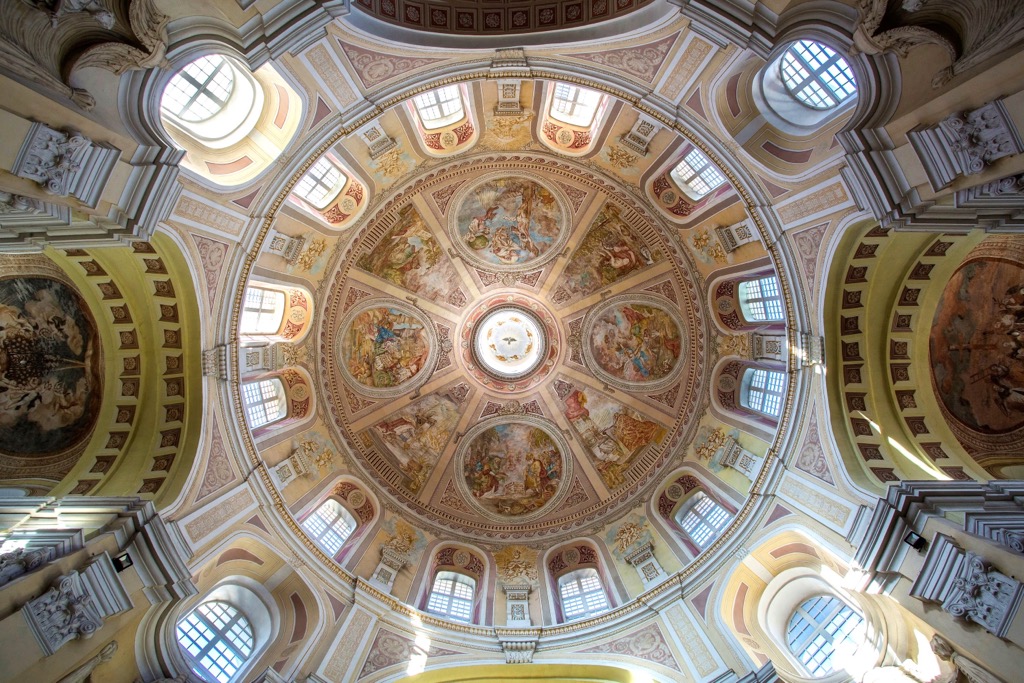
If you decide to travel east from Gniezno, be sure to stop in Trzemeszno to see a basilica. Then, the Piast Trail continues east to Mogilno, which features a stunning Benedictine monastery dating back to 1050. You also need to visit famous Kruszwica with its Mouse Tower, known for the legend of the cruel King Popiel, although in reality, the tower is a remnant of a castle of King Casimir the Great.
Events along the trail
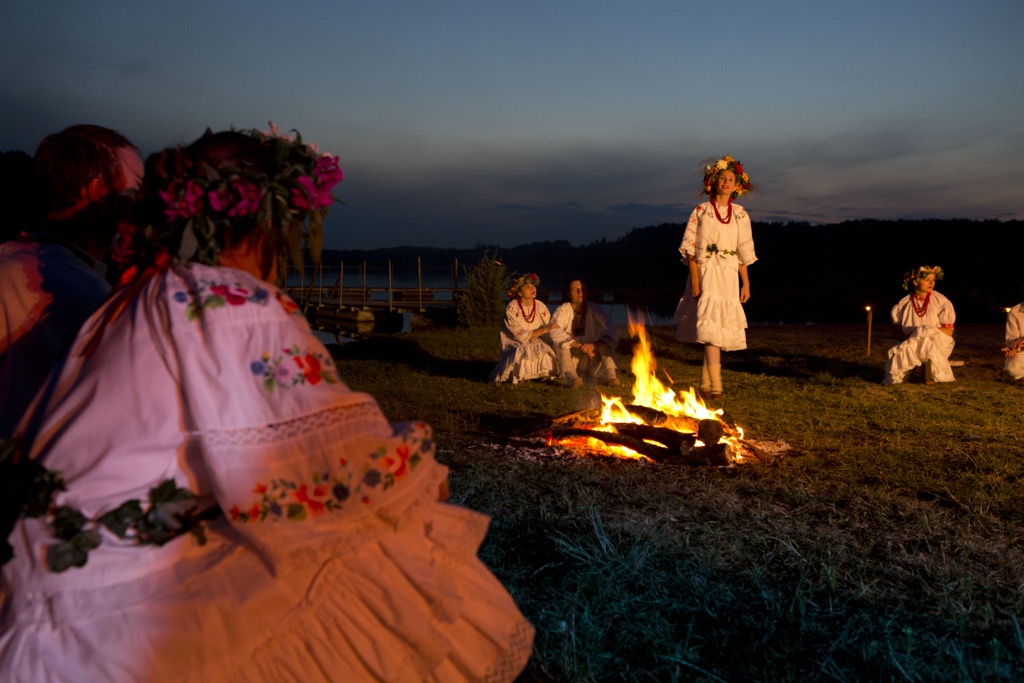
The Piast Trail is not only about silent witnesses of the past. Each year, the trail hosts over a dozen intriguing events that vividly bring history to life. For a good start, in spring, you can attend the Festival of Slavic and Cistercian Culture in Ląd, where you’ll learn about the life both in an early medieval stronghold and monastery. At the end of July, it’s worth visiting Gniezno, where the Royal Coronation takes place at the foot of the cathedral. In August, several hundred reenactors gather at the stronghold in Grzybowo for Grzybowo Warrior Tournament, where battle demonstrations are held regularly, ending with a grand final battle. The events at the stronghold in Giecz, in turn, will take you into the mystical world of pagan beliefs. A particularly worthwhile event is November “Dziady”, which offers a glimpse into pre-Christian funeral rituals and a captivating exploration of myths and legends of our Slavic ancestors.
From May to November, you can visit Pobiedziska Stronghold, where under the watchful eye of the comes, medieval siege machines (including working catapults), old armament and other aspects of life in the Piast era are presented. Brave visitors can try firing a trebuchet or a massive arbalest themselves.