What does the Wielkopolska Region taste like? First and foremost, our traditional cuisine differs from what is usually associated with Polish cuisine. Neither pierogi nor beetroot soup are typical flavours here. The undisputed king is the potato, served in various ways, as well as roast duck and numerous dishes shaped by Czech and German culinary influences.
Potatoes first
It is true that popular opinion strongly associates Wielkopolska with potatoes (known in the local dialect as pyry). The simplest yet best-known dish is pyry z gzikiem – potatoes boiled in their skins, served with cottage cheese, sour cream, radish, and chives. Also characteristic are plyndze, known in other parts of the country as potato pancakes. In the Poznań version, they are served with sugar, or with sweetened sour cream – something that often surprises people from other regions of Poland.
Potatoes are also used to make dumplings, such as szagówki, known in Poland as kopytka. They are served with cooked sauerkraut. Another popular dish in the Wielkopolska Region is szare kluchy – potato dumplings, irregular in shape and indeed grey in colour. They are eaten with bacon or smoked pork cracklings and with cooked sauerkraut.

For dinner
Potatoes alone, however, are not sufficient for a complete regional meal. For a Sunday dinner (or as a signature dish in many restaurants), we recommend roast duck stuffed with apples, served with pyzy (yeast-based steamed dumplings without filling) and red cabbage. An even more festive dish is goose, traditionally served on St Martin’s Day. A substantial meal is also pork knuckle, which may be boiled or roasted; in both versions it tastes excellent with sauerkraut and boiled or roasted potatoes.
Before these classics reach the table, you may also try one of the traditional soups of the Wielkopolska Region. Once, the absolute classic was czernina, a sweet-and-sour soup prepared with duck blood. It can still be found on menus today. In the autumn period, however, pumpkin soup is far more popular. It is particularly warming on cold evenings, as is parzybroda, also known as rumpuć, a thick and very hearty version of cabbage soup with meat.


Something sweet
A must-try is the St Martin’s croissant, which may only be baked by certified bakeries in Poznań and its surroundings. A genuine croissant is made from semi-flaky pastry, filled with white poppy seeds and dried fruit, and generously glazed with icing. It tastes best on St Martin’s Day (11 November), but it can be enjoyed throughout the year. The city also hosts the Poznań Croissant Museum, where visitors can learn everything about these croissants.
Another seasonal treat is faworki, also known as chruściki. These fried pastries are typical for the last day of Carnival. Similarly, pączki (doughnuts) remain a staple delicacy for many on New Year’s Eve and New Year’s Day.
A uniquely Poznań tradition, now increasingly rare, is the Poznań rury (meaning tubes), pastries made from crisp dough with or without coloured icing. They can now only be found at fairs and special festivals. The name derives from the traditional method of baking them on a heated metal tube, which gave the pastries their characteristic shape.


Cheese
Wielkopolska has always been renowned for its excellent cheeses, especially full-fat cottage cheeses, but also matured cheeses. Goat cheeses remain particularly popular today, although these are not typically found in supermarkets – they are best sought at markets and fairs, for example during the Green Market every Saturday in Poznań.
One product that must be tried is fried cheese. It has nothing in common with Czech fried cheese in breadcrumbs. It is a cow’s milk cottage cheese that has undergone a maturation process and is then fried to produce a thick paste suitable for spreading on bread. It can be purchased in any shop.
Wine and beer
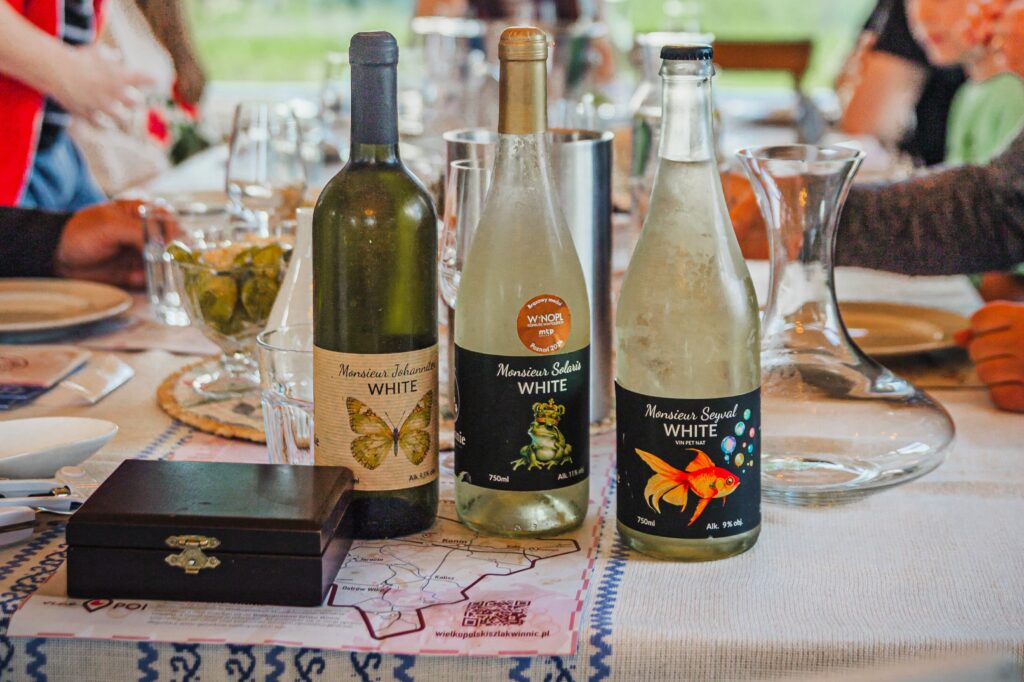
In recent years, winemaking has experienced a revival in Wielkopolska, and there are now almost 40 vineyards in operation. Most of them are small, family-run farms, producing up to several thousand bottles per year. In our climate, grape varieties such as Johanniter, Solaris, Regent, Chardonnay, Riesling, and Hibernal thrive best. Many vineyards offer tours, tastings, and accommodation.

Brewing also has a long tradition in the region. The most emblematic beer of the Wielkopolska Region is Grodziskie beer. Just as the Czechs created the Pilsner in Plzeň, the town of Grodzisk Wielkopolski gave rise to the beer style known as Grodzisz or Grodziskie. It is a light, pale beer with distinct smoky aromas, once referred to as the ‘Polish champagne’. The region hosts several breweries that also produce typical lagers, stouts, and ales, though for something more unusual you can try beers with mango or those aged in whisky barrels.