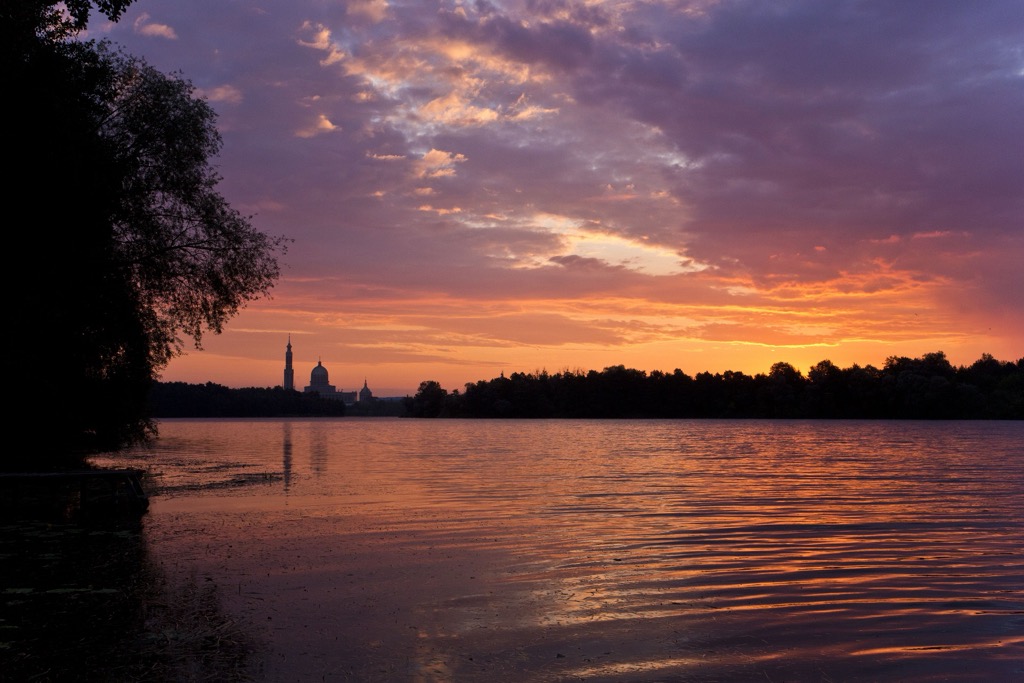
Konin is a city of genuine contrasts. On the one hand, it is an important industrial centre of the Wielkopolska Region, home to large power plants and, until recently, a steelworks. On the other, Konin offers an intimate old town, medieval monuments and, above all, more than a dozen lakes, waterways, and marinas that make it possible to set off on a cruise along the Great Waterway Loop of Wielkopolska.
Konin milestone
The milestone is Konin’s oldest monument. Tourists puzzle over whether it is a Sviatovid idol, signpost, or even phallic symbol linked to pagan cults. The inscription resolves this: erected in 1151 by palatine Piotr Włostowic, it marks the halfway point between Kalisz and Kruszwica.
This Romanesque milestone – a road marker, Poland’s oldest and one of Europe’s, uniquely preserved beyond the former Roman Empire borders – stands near the Gothic Church of St Bartholomew the Apostle.

Konin old town
The milestone stands near the Gothic Church of St Bartholomew the Apostle, whose interior features Gothic, Baroque and Renaissance furnishings. In the Renaissance chapel, note the tomb of the founder Jan Zemełka – the wealthiest and most influential citizen of Konin in the Renaissance period.
Near Castle Square stands a remarkable synagogue dating from 1832, notable for its unique Moorish-Byzantine architecture. Visitors can also step into the thoroughly restored Zemełka House, which now houses the tourist information centre.
View the Neoclassical Town Hall from the right angle to appreciate its full design. Konin is also home to a monastery from the first half of the 18th century belonging to the Franciscan Reformati. Modern symbols of the city include the riverside walking boulevards along the Warta River and an avant-garde horse sculpture standing in the market square.
Gosławice
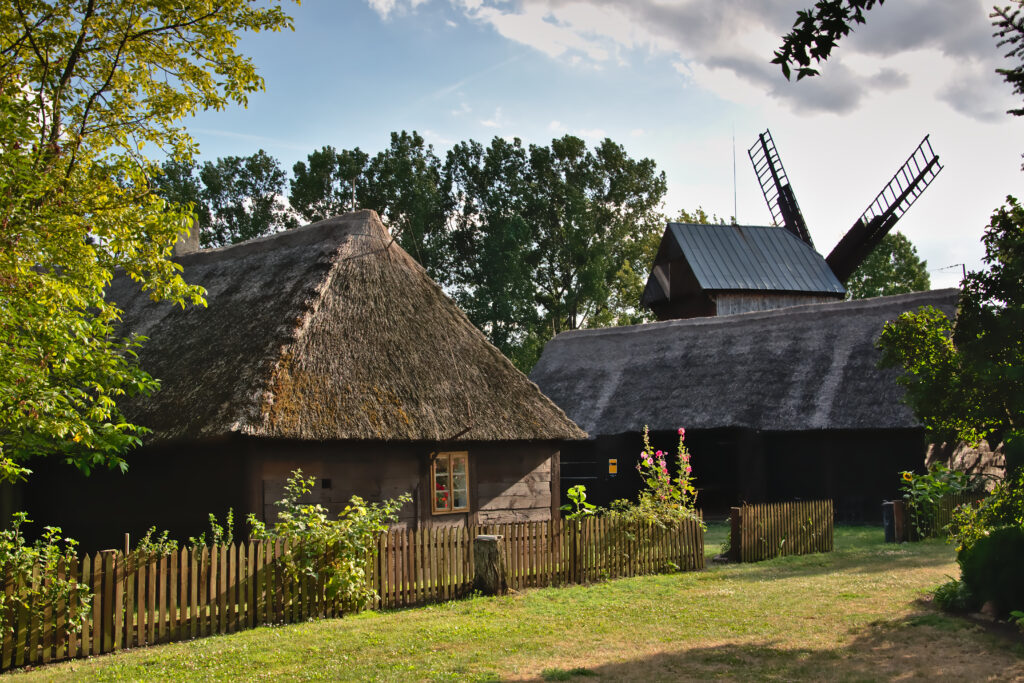
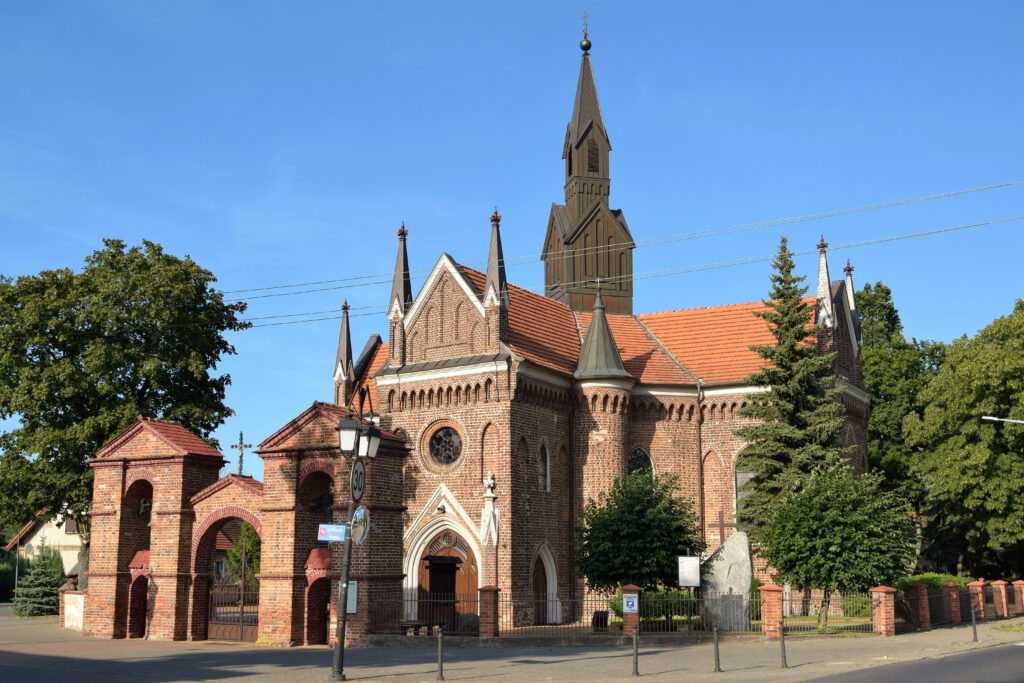
Gosławice Castle, located in the northern part of the city, is the main seat of the District Museum in Konin. The founder of both the Gothic castle and the nearby church was the Bishop of Poznań, Andrzej Łaskarzyc. The museum’s collections include the remains of extinct large herbivores that once inhabited the area of present-day Konin. The exhibition highlight is a life-size model of a forest elephant that lived in this region around 100,000 years ago.
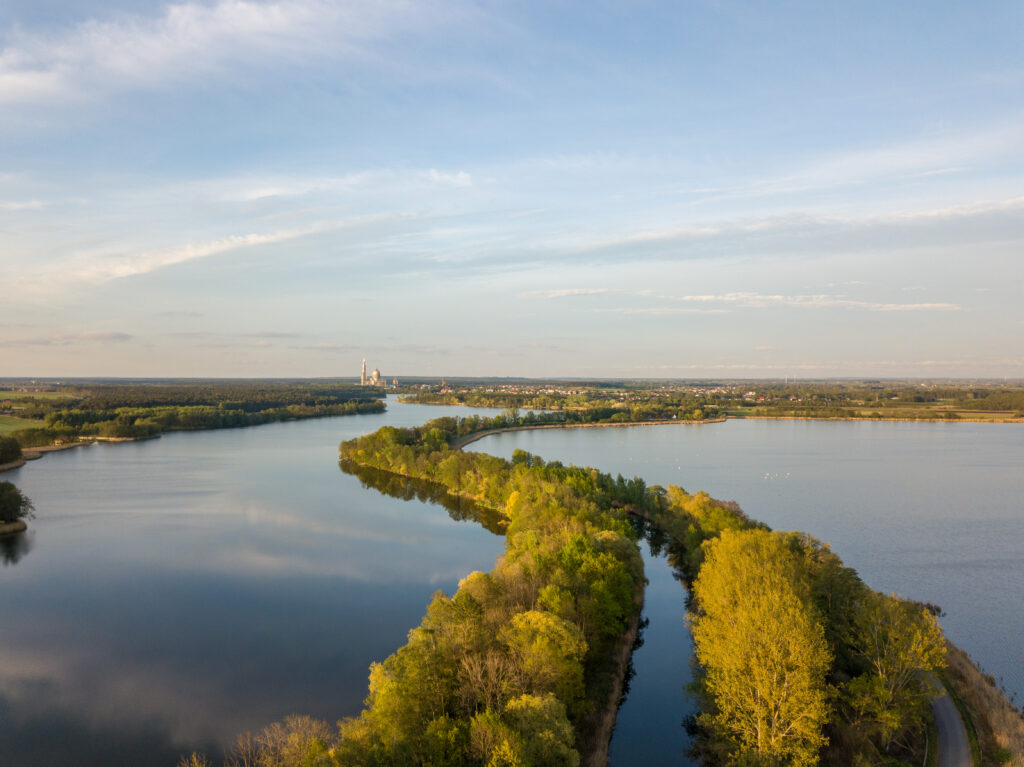
The exhibition is divided into several sections. The castle itself presents the history of the city. Visitors can also explore a former manor house, a small open-air museum, and an exhibition devoted to open-cast mining. The mining theme is no coincidence, as this area was once home to vast deposits of lignite. Today, the mine is being phased out, and the enormous post-mining pits are being reclaimed. On the opposite shore of Gosławskie Lake, the massive silhouette of the Pątnów Power Plant can be seen, which from this perspective resembles a transatlantic liner gliding across the water.
The Great Waterway Loop of Wielkopolska and the Konin lakes
Dubbed the ‘Masuria of the Wielkopolska Region’, Konin’s surroundings surprise with lakes and water sports. North of Konin, maps show dense waterways; the largest – Gosławskie, Pątnowskie, Mikorzyńskie, and Licheńskie – link via natural courses and canals into the Great Waterway Loop of Wielkopolska, extending to Gopło Lake.
Marinas and moorings dot their shores. Equipment hire centres offer a broad range of options for experienced boaters and occasional kayakers alike.
Konin key on Poland’s most intriguing inland routes – the Great Waterway Loop of Wielkopolska. This scenic yet challenging waterway is almost 700 km long. The Warta River Boulevard in Konin is a good place to begin a journey along the route.