‘Things were better in the past…’ We often say this when recalling how the food used to taste better, people were friendlier, and life moved at a slower pace. For this reason, we invite you on a trip to a place where you can see for yourself whether tradition and atmosphere do make a difference, while also exploring picturesque towns and meeting their welcoming residents. Let us set out on a journey to Wolsztyn, Rakoniewice, and Grodzisk Wielkopolski.
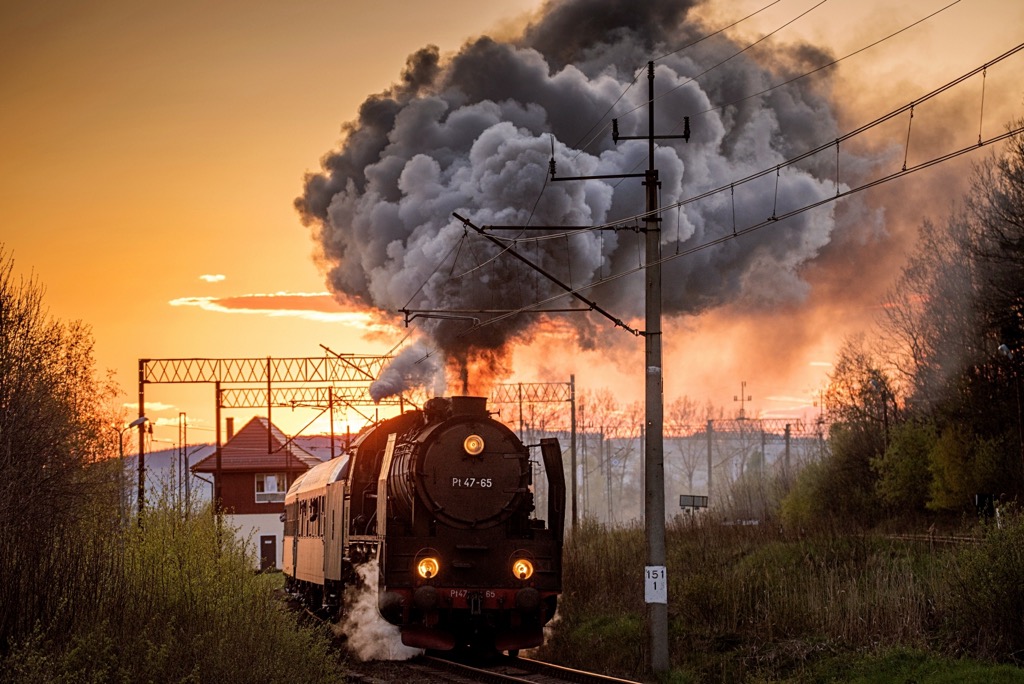
These three towns are connected not only by a shared history and similar atmosphere, but also by a unique railway line – the only one of its kind in Poland. On the line from Poznań to Wolsztyn, scheduled services are still operated by steam locomotives, much like those used by our grandparents. Begin your weekend in Wolsztyn with a morning steam train from Poznań, then hop on modern railcars to explore the surrounding towns.
Wolsztyn
A town under steam
Wolsztyn is universally associated with steam locomotives – and rightly so. Here operates the only active steam locomotive depot in Europe servicing scheduled traffic on standard-gauge lines. The Wolsztyn Steam Locomotive Depot has been in continuous operation for over a century. This is where steam locomotives get their daily check-ups, with busy technical workshops in full swing. Most importantly, all of this can be observed by visitors – simply purchase a ticket. Be sure to visit the on-site museum and see the fully operational turntable, on which locomotives weighing many tonnes rotate like on a carousel.

Strolling around the town
However, a weekend in Wolsztyn is not limited to steam locomotives. Head to the town centre and the lakeside to discover one of the most pleasant small towns in the Wielkopolska Region. Begin your exploration along Robert Koch Street, visiting both the museum dedicated to this Nobel laureate, who lived in Wolsztyn, and the adjacent tourist information point. The heart of Wolsztyn is the Market Square, dominated by the Town Hall, and in summer animated by a splendid fountain – an ideal spot for a morning coffee or ice cream; we recommend Café de Paris. From here, it is just a few steps to the pier and lakeside promenade (down Poznańska Street). Continue north towards the beach and the water sports marina. Along the way, look out for the mysterious faces carved into a tree. These were created by the renowned Wielkopolska artist Marcin Rożek, who had his home and studio in Wolsztyn, now a museum. Inside the museum, you can see the originals, while the tree displays their reproductions.
Cycling along the Cistercian Trail
We suggest spending the second half of the day actively by bicycle (although, of course, you can also relax by the lake or enjoy a coffee – or something else – in one of Wolsztyn’s many cafés). At Fala Park, you can rent bicycles and ride to nearby Obra, where the former Cistercian monastery and the beautiful Rococo St James’ Church from the mid-18th century are located.
From Wolsztyn, a well-maintained and comfortable cycling path leads to Obra. The distance is only 8 km, making it easy to cycle to Obra and back to Wolsztyn in about two hours.
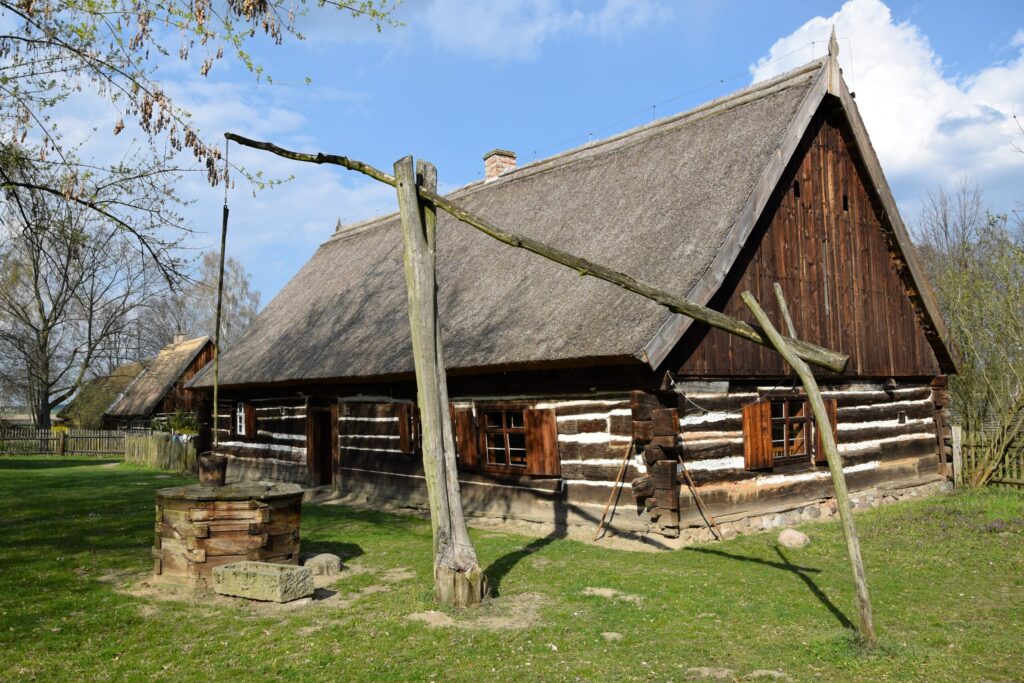

To conclude the day, we have two suggestions. Naturally, you can return to the station to watch the afternoon arrival of a steam locomotive and then head to the pier to enjoy the sunset – an excellent vantage point. Alternatively, you can visit the Open-Air Museum of Folk Architecture of Western Wielkopolska (or cycle there on your way back from Obra). This remarkable site preserves an entire historic village, allowing you to see how people once lived in the region, how a miller worked, and what life in a smithy looked like.
Firefighters from the old church
From Wolsztyn it takes only twenty minutes to reach Rakoniewice – whether by a Wielkopolska Railways train or by car. Begin your visit at the market square, the town’s central point. You will immediately notice that Rakoniewice has a special connection with firefighters – the fountain, with water flowing from fire hoses, leaves no doubt about that.
Next, look for the old half-timbered Evangelical church. Its black-and-white chequered walls are highly distinctive and reminiscent of the picturesque small towns of Germany. This time, however, we will not be viewing sacred art – the church and the adjacent buildings house the Wielkopolska Museum of Firefighting. After all, who has not dreamed of becoming a firefighter? Inside, you will find a collection of firefighting equipment, uniforms, helmets and several fire engines. The museum even features a siren you can activate, as well as a real fireman’s pole for sliding down.
Off to Grodzisk for a Taste of Grodzisk Beer
The Czechs have Plzeň and their famous Pilsner; we have Grodzisk Wielkopolski and our very own beer called Grodzisz or Grodziskie. It is the only truly indigenous Polish beer style, created right here in this town. Its gently smoky aroma, low alcohol content, and high carbonation are its defining features. The beer is still brewed in Grodzisk today, and the town is full of references to its brewing heritage.
Begin your visit at the main market square, where, opposite the town hall, you’ll find the Father Bernard Well and a statue of the monk himself. Legend has it that the Benedictine’s prayer caused a dried-up spring used by local brewers to flow again, providing the best water in the region. Look around for the plaque telling the full story. From the square it’s only a few steps to the historic Grodzisk Brewery building. It is open for guided tours a few times a year, but even viewed from the outside it is a fascinating piece of industrial heritage.
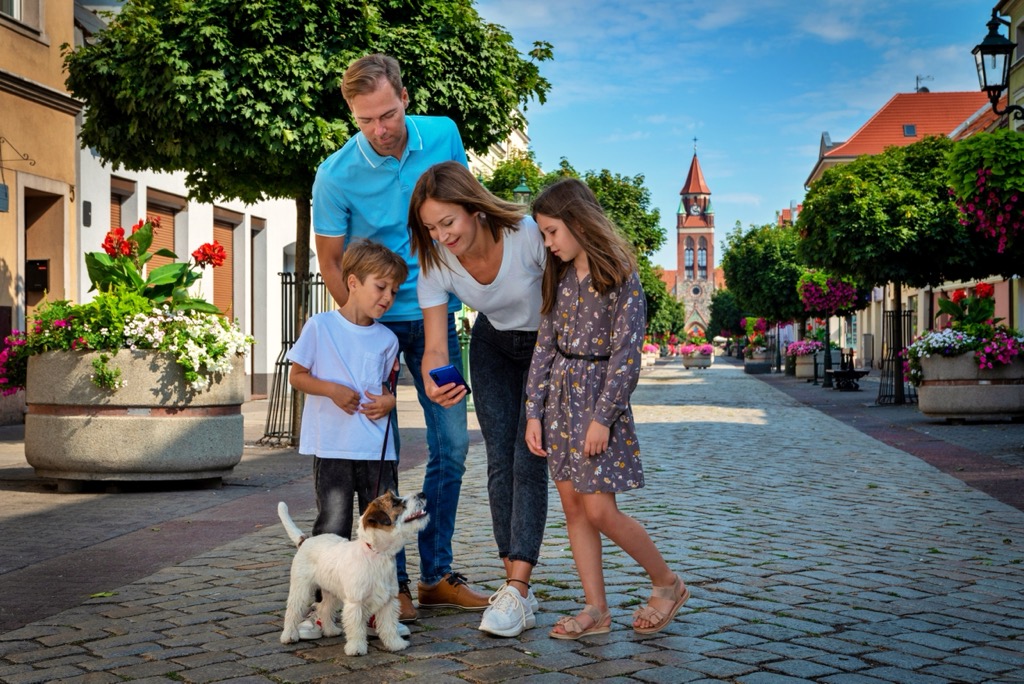

Yet Grodzisk is not only about beer (although you will encounter brewery buildings at every turn). Take a stroll along the pedestrian street linking the town’s two market squares. Why two? The town expanded rapidly, and new settlers began to build up the outskirts, eventually forming a separate urban centre that was later merged with the old one. The impressive church standing in the middle of the new market square was once an Evangelical meeting house.
Nowy Tomyśl
A town of hops and wicker
Nowy Tomyśl is a relatively young town, founded in the 18th century. It was intended to serve as a centre of Olęder settlement. The Olęders were settlers – initially from the Netherlands, and later also from Germany and other regions of Poland – who established themselves on infertile, difficult-to-cultivate land. Equipped with specialised knowledge and, for the time, extraordinary privileges, they made productive use of this land. The area proved ideal for cultivating hops and wicker, traditions that continue to this day.


We begin with a walk along the town’s tourist trail, which takes you through all the key points of interest. Many of these are linked to wickerwork and hop cultivation. A unique highlight is the world’s largest wicker basket, standing in the Nowy Tomyśl market square, right next to the Town Hall, built in 1879. Following the trail, you will also see the wicker amphitheatre and two historic churches. Interestingly, until the end of the 19th century, the town had no Catholic place of worship.
For more on Nowy Tomyśl’s two treasures, visit the Museum of Wickerwork and Hop Growing. The permanent exhibition alone is impressive, but the museum’s weaving workshops and demonstrations are particularly engaging.
A fairy-tale castle
Wąsowo Palace is a romantic residence with truly fairy-tale features. Here, you will find not just one, but two palaces. The older building, designed in the Classical style, was constructed between 1780 and 1786 for Sylwester Sczaniecki. In the second half of the 19th century, the estate was purchased by Richard Hardt, who built a second palace in the Romantic Neo-Gothic style, complete with a soaring tower, cloisters, and ornate portals.
Today, the palace houses an elegant hotel and restaurant, but visitors are welcome to stroll through the park and gardens and even peek into the outbuildings. You can also stay overnight in the palace for a truly fairy-tale experience. While the rooms feature period-style furniture and fireplaces, the basement includes a swimming pool and spa, so the comfort is far from that of a medieval castle.
If you prefer a more rustic experience, no problem! Just beyond the wall lies the Wąsowo Manor Farm – once an integral part of Richard Hardt’s estate, now a wonderful place to enjoy countryside relaxation in stylish rooms. It is particularly renowned for its cuisine and homemade fruit and vegetable preserves. Be sure to try the pierogi and the delicious beetroot with apple or strawberry. Don’t be surprised if a cat strolls through the dining room or the owner offers you a homemade liqueur.
Zbąszyń
Playing the goat: a local musical tradition
On the second day, we head to Zbąszyń. This town is the main centre of the so-called Kozioł Region (Polish: kozioł – ‘goat’). This isn’t just about the charming and somewhat stubborn animal – the kozioł is a traditional wind instrument, somewhat similar to bagpipes, but unique to this particular region of Poland. Even if no player or folk band is nearby (though they often perform at weddings), you can still see a monument of the musician in the Zbąszyń market square, as well as visit the Museum of the Zbąszyń Land and the Kozioł Region, which features an exhibition of musical instruments, including the kozioł.
In Zbąszyń, be sure to also see the late Baroque parish church and the historic palace park, complete with a tower and a partially preserved moat – remnants of a Renaissance palazzo in fortezza (a palace surrounded by defensive fortifications). While much of the palace and fortress has not survived, the site still retains its distinctive atmosphere.
A town by the lake
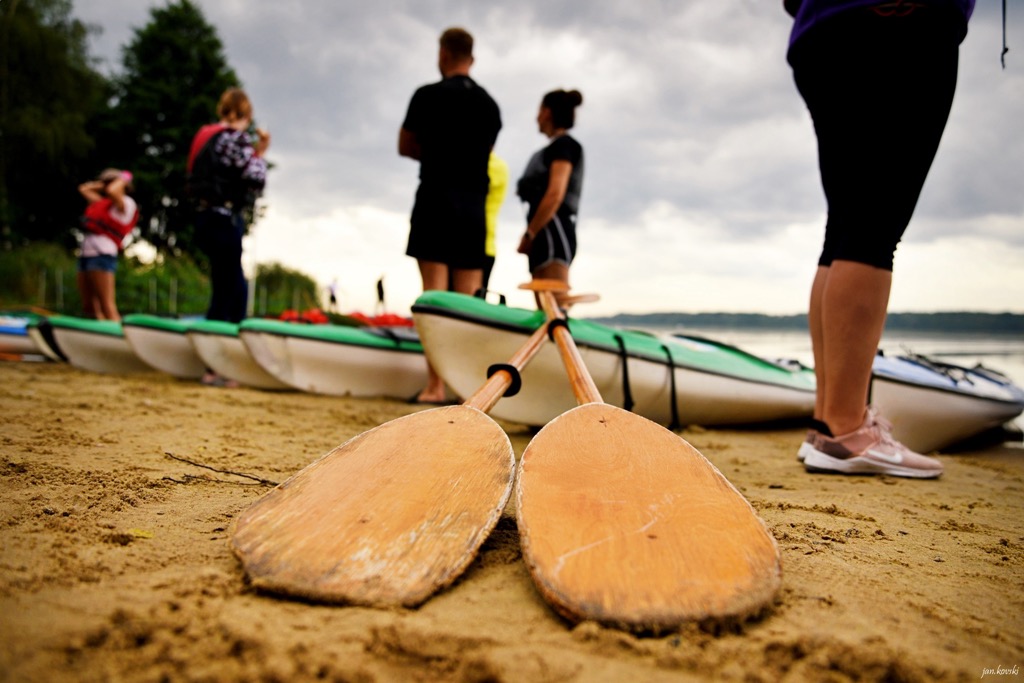
Life isn’t just about sightseeing! We suggest spending the second part of the day on the beach by Błędno Lake. Of course, you don’t have to just lie on the sand or grass with an ice cream in hand. The lake is perfect for water sports. Whether you prefer to get a bit of exercise in a kayak, feel the wind in your sails, or simply take a leisurely ride on a pedalo, this is the ideal spot. During the summer, a water tram operates from the lakeside pier, and right next to it, you’ll find a fully equipped campsite.

Wine from Wielkopolska
Would you believe that Wielkopolska has been steadily developing as a new wine region in Europe over the past few years? While vineyards have long been established in the neighbouring Lubusz Province, more than 40 now operate in Wielkopolska itself, with the highest concentration in the western part of the region, around Nowy Tomyśl, Zbąszyń, and Międzychód.
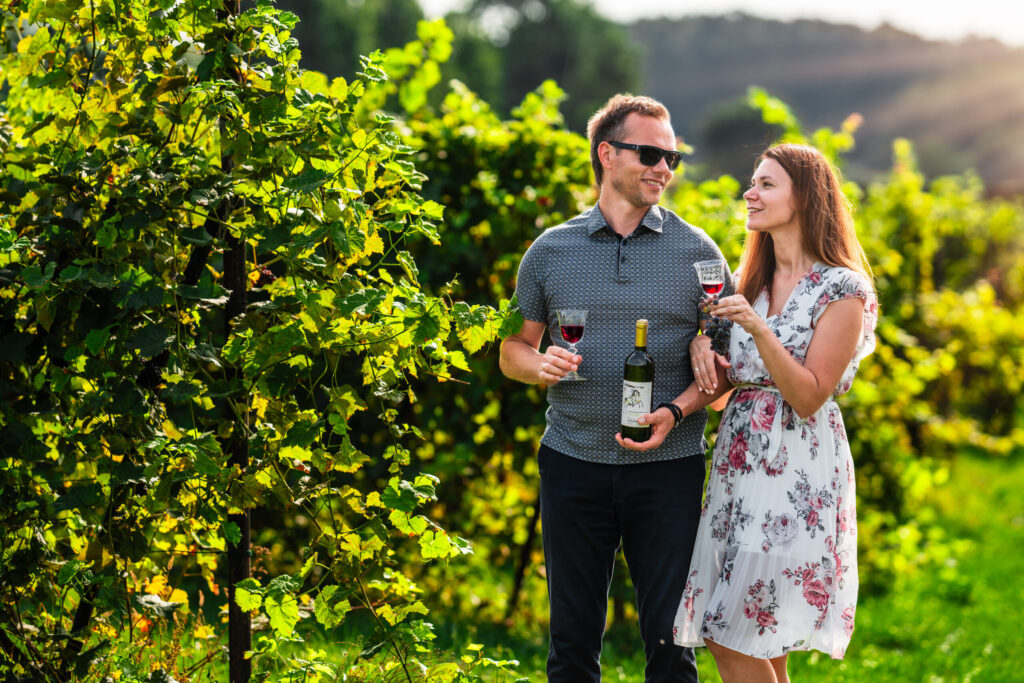
Most of these vineyards are small, family-run enterprises. Many offer guided tours where visitors can learn about the entire winemaking process. Intimate gatherings, lectures, feasts, and tastings are arranged according to visitors’ preferences and interests. They are all connected by the Wielkopolska Wine Route, whose brown signposts you will easily spot along the way.
Mushroom picking
Some say that mushroom picking is Poland’s national sport. There’s probably some truth to that if you consider the number of foragers wandering through Wielkopolska’s forests in the autumn. One of the best locations is the bright pine woods around Nowy Tomyśl and Międzychód. The ideal time to visit is early in the morning, just after sunrise – not only to get ahead of other pickers, but also to enjoy the rising mists, dew glistening on the grass, and the sounds of nature.