When we think of the historical borderlands of the Polish-Lithuanian Commonwealth, we usually picture distant eastern regions. Yet a multicultural frontier existed also here, around Leszno, Rydzyna, and Rawicz-a place where languages, religions, and traditions blended over centuries. Today, traces of this rich heritage can be found in charming towns, royal castles, aristocratic palaces, and even old wooden windmills proudly standing on the hills. Nearby lakes promise a fantastic weekend escape-whether you prefer lazy time on the beach or active adventures on a bike or in a kayak.
Leszno – The City of Four Cultures
We begin our weekend journey in Leszno, just a few kilometres from the border of Greater Poland and Lower Silesia-an area where cultures, faiths, and languages have mixed for centuries. For many, Leszno was a safe haven: Catholics (mostly Poles and Germans), Protestants, Jews, and the remarkable Czech Brethren lived side by side. The Brethren arrived as refugees from Habsburg lands, led by Jan Amos Komensky-an outstanding Czech philosopher and scholar. They founded a prestigious school and an influential printing press.
Their traces are still visible today: within a few hundred metres you’ll find the richly decorated Catholic church of St. Nicholas, the modest former Evangelical church with its tall tower (today the Church of the Holy Spirit), and the church of St. John the Baptist, once belonging to the Czech Brethren. In the former Jewish district stands the old synagogue, now a museum and art gallery.


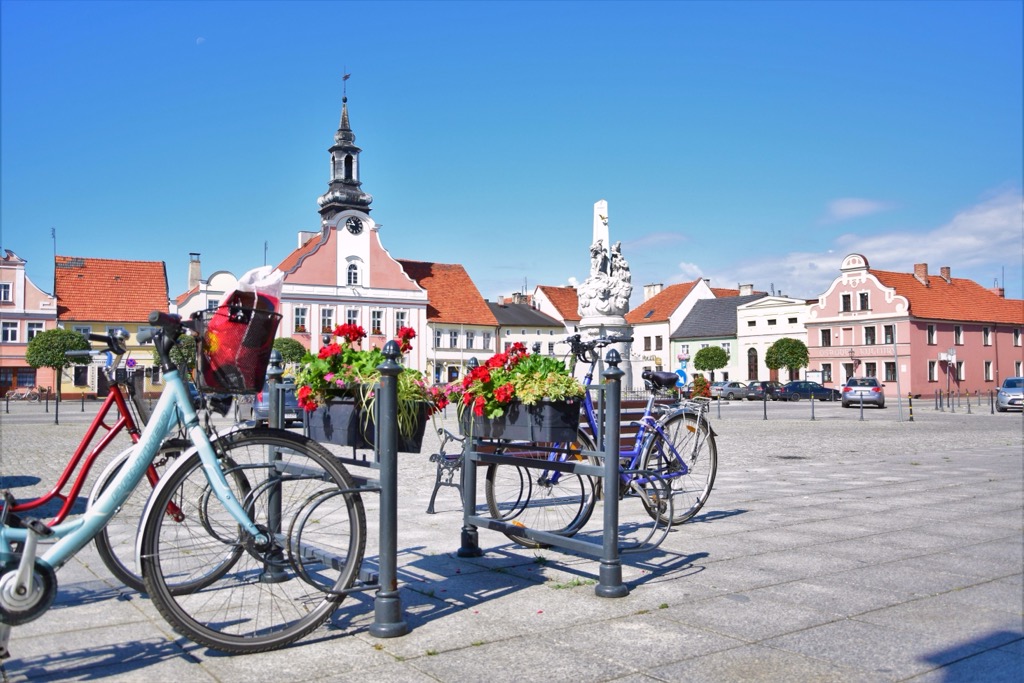
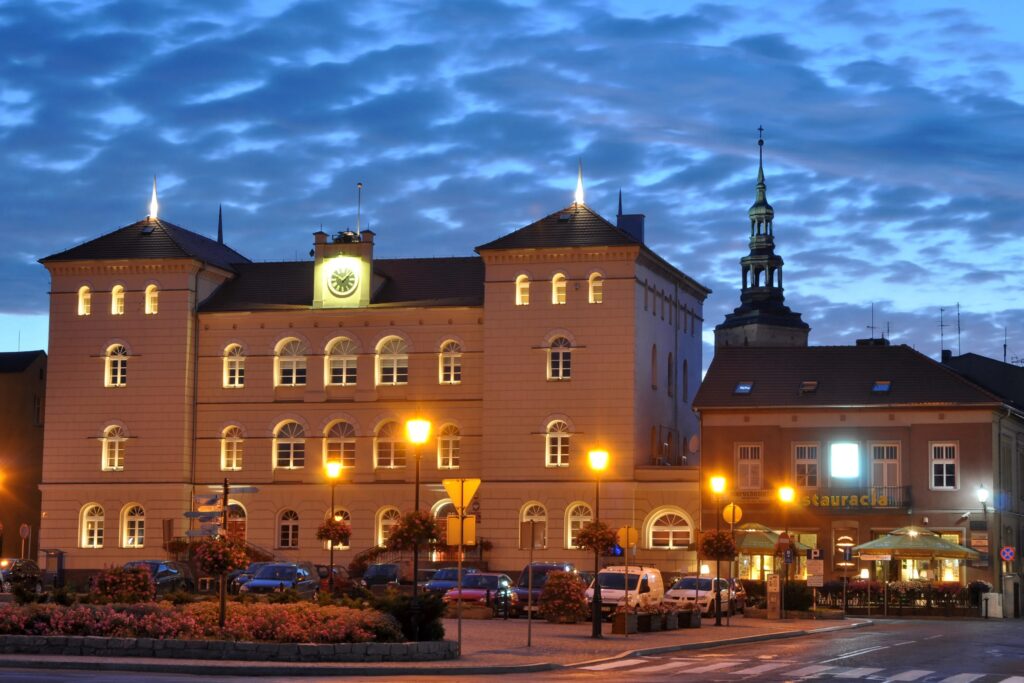
Your walk through Leszno should begin at the Market Square, crowned by a town hall redesigned in 1709 by the Italian architect Pompeo Ferrari. Its tower features a carillon that plays melodies several times a day. Around the square stand colourful townhouses-the oldest, number 29, is known as “Wieniawa”.
Nearby, don’t miss the former Sułkowski Palace. Leszno is best explored on foot-wander through narrow streets, search for murals, especially the one on Więzienna Street showing the Czech princess Dąbrówka and the knight Wieniawa saving her from wolves.
The Biggest Air Show in Poland
Leszno is famous for its spectacular Antidotum Airshow Leszno – Poland’s largest recurring aviation event. Tens of thousands of visitors watch military jets and helicopters, aerobatic teams, gliders, paragliders, skydivers, and more. The show uniquely combines daytime demonstrations with breathtaking nighttime displays filled with pyrotechnics, all accompanied by live music.
Rydzyna – The Little Versailles of Greater Poland
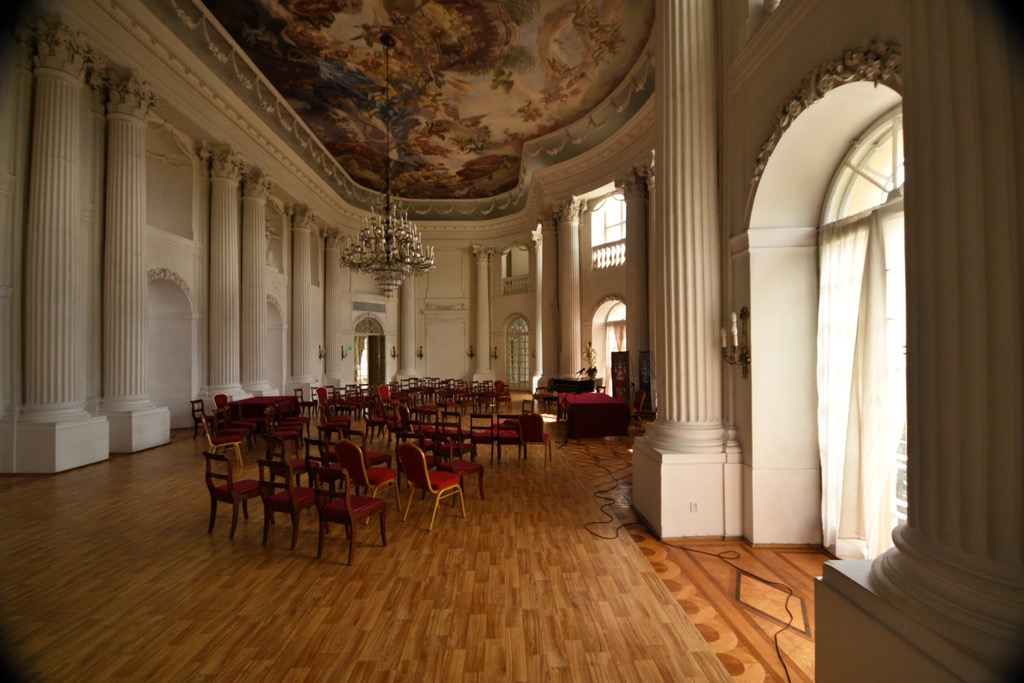
The Royal Castle in Rydzyna is a masterpiece of baroque architecture. Together with the town, it forms a harmonious urban complex comparable to Warsaw’s Wilanów-and in spirit, even to Versailles. Architect Karol Martin Frantz designed its grand staircase and dazzling ballroom, decorated with a vast fresco depicting the wedding of Aleksander Sułkowski and Anna Przebendowska. The ballroom still hosts concerts and grand events.
Although the castle was burned in 1945, many interiors were successfully restored. Highlights include the Sea Hall, the Four Seasons Hall, and the recently reconstructed Grand Alcove with its stone drapery and rococo fireplace. Today the castle functions as a hotel-perfect for anyone dreaming of spending a night in princely surroundings.

In the Land of Windmills
Once, Greater Poland had several thousand windmills-today about 200 survive, the largest number in the country. No wonder a Windmill Trail was created here, especially around Leszno. The most fascinating stop is the Milling Museum in Osieczna, run by Jarek Jankowski, a specialist in wooden monument restoration and an endless source of stories. The museum features three historic windmills, a smaller educational one, a café with fantastic homemade cakes, and a bread oven used for baking workshops.


Kayaking Among the Lakes
West of Leszno lies the Przemęt Landscape Park – a region of lakes linked by canals and rivers, forests, and green hills topped with viewing towers. Perfect for hikes, bike trips, and especially kayaking. The best route is the 37‑kilometre Lily-of-the-Valley Kayak Trail-easy, family-friendly, and full of attractions. Its highlight is Konwaliowa Island on Lake Radomierskie, home to a rare colony of reddish lily-of-the-valley. The island is a protected reserve, but the view from the kayak is magical.
Much of this landscape was shaped by medieval Cistercians, who built canals, improved farmland, and introduced modern agricultural techniques. Their monumental church of St. John the Baptist in nearby Przemęt is still known as “the cathedral” for its impressive size.
The region is also Poland’s asparagus capital-the fields around Przemęt produce some of the best. Visit in spring and look for restaurants with seasonal asparagus menus.

Following the Footsteps of Monks
We’ve already covered the Cistercians of Przemęt, who settled far off the beaten path centuries ago to live by their famous rule: ora et labora – “pray and work.” Through their hard work, they completely reshaped the landscape—though they probably never imagined they were creating a prime spot for a kayaking trip!
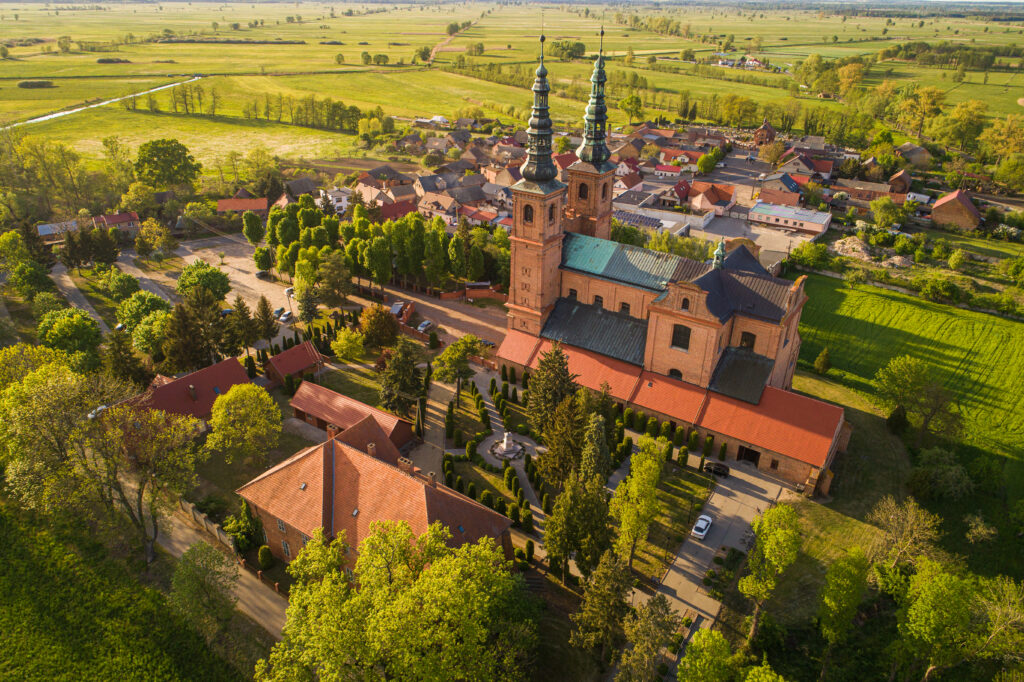
However, over the past millennium, the area around Leszno became home to many other religious orders (some arriving voluntarily, others invited here on purpose), giving rise to numerous abbeys and monasteries. Undoubtedly, the most impressive of them all is the Benedictine Abbey in Lubiń. Its majestic silhouette, crowned with a soaring tower, can be spotted from miles away. Dating back to the 11th century, it is one of the two oldest abbeys in Poland. Legend has it that Gallus Anonymus, Poland’s very first chronicler, penned his famous work right here. The abbey is open to visitors, as is the nearby Romanesque Church of St. Leonard. A vibrant tradition still kept alive by the monks today is Benedyktynka—their famous herbal liqueur renowned for its health properties. You can pick up a bottle right on-site or at good local souvenir shops.

Colorful Biskupizna
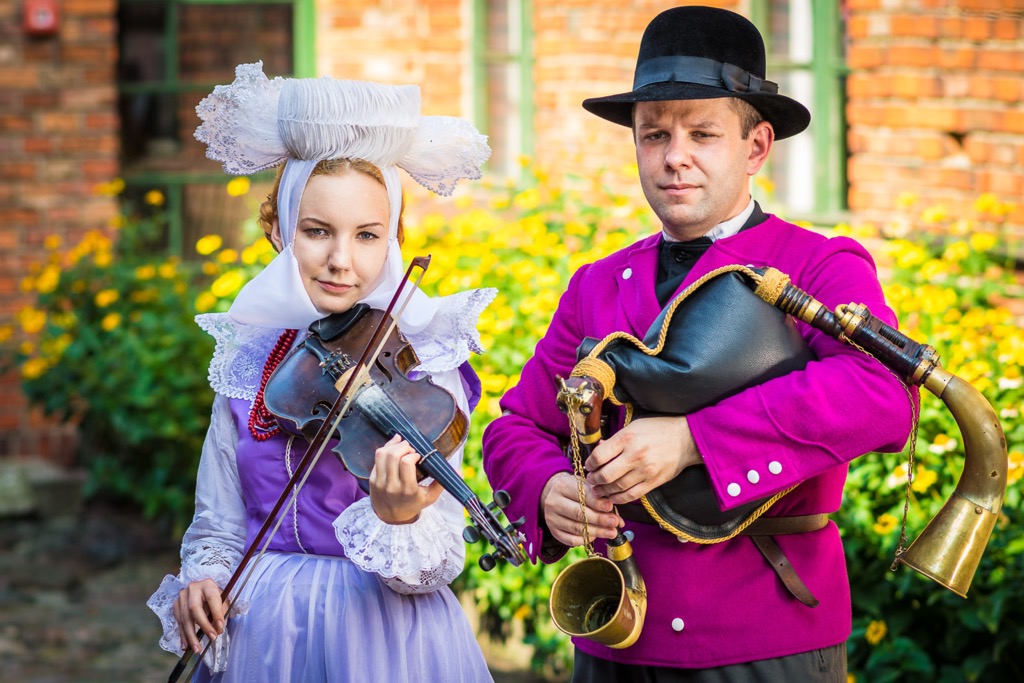
A short drive away is Krobia, the heart of Biskupizna-the smallest ethnographic region in Poland. Once owned by the bishops of Poznań, the area developed a strong sense of identity expressed through distinctive costumes, dialect, traditions, dances, and cuisine. Visit the Museum of Carpentry and Biskupizna, especially during holiday periods, when colourful local processions fill the streets.
Nearby Domachowo is home to the second-oldest wooden church in Poland-its true age was discovered only recently after medieval wall paintings came to light.
Busy as a Bee
If you love honey, visit the Live Honey Museum in Pakosław, where you can follow the entire honey-making process-from flowering meadows to buzzing hives and freshly filled jars. Passionate beekeepers lead workshops and demonstrations, and of course, every visitor leaves with a jar of excellent local honey.
A Walk Through Śrem
End your weekend in Śrem, a historic town halfway between Leszno and Poznań. In medieval times, it was one of Poland’s major trade centres-proof of which is the 62‑metre tower of its Gothic parish church. During holidays, step inside to see its famous moving nativity scene.
Cross the Warta River to reach the riverside promenade leading to the Śrem Museum. Next to it stands the city’s iconic 1909 water tower, resembling a castle turret. Somewhere nearby sits a charming statue of the Little Match Girl beside an old gas lantern-go for a walk and see if you can find her.

Basilica on the Holy Mountain (Święta Góra)
In the relatively flat countryside of southern Greater Poland, hills have always sparked a sense of wonder. Perched on one of them—aptly named Święta Góra (Holy Mountain) on the outskirts of Gostyń—stands one of Poland’s finest Baroque churches. Part of an Oratorian monastery, the Basilica on Święta Góra is far more than a renowned Marian shrine. It is famous above all for boasting the largest dome in Poland (17 meters in diameter and 50 meters high) and hosting a beloved annual festival of oratorio music.

Back in 1668, nobleman Adam Konarzewski brought the Oratorian Order to Święta Góra, and the congregation remains here to this day. The basilica was modeled after Venice’s iconic Santa Maria della Salute, which deeply captivated Adam’s wife, Zofia Opalińska. To bring her vision to life, prominent Italian architects—Jan and Jerzy Catenazzi, alongside Pompeo Ferrari—were brought on board.
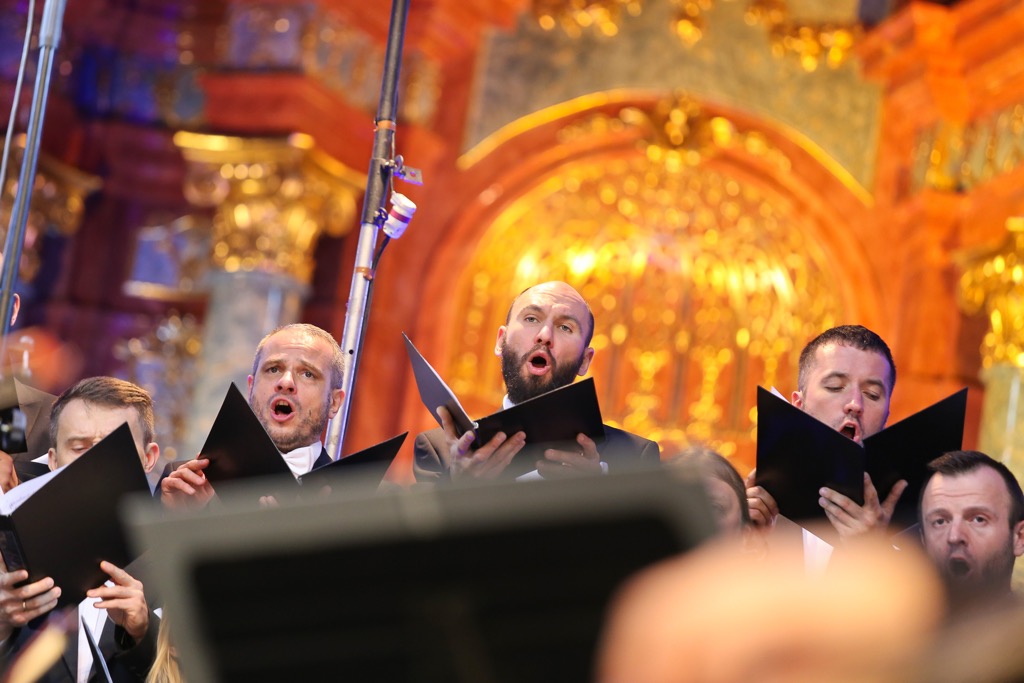
Every year in late September, the church comes alive with the Musica Sacromontana Oratorio Music Festival. The event was born after researchers uncovered lost musical manuscripts written by composers tied directly to the basilica. Music has always played a vital role in the life and work of the Oratorians. Today, alongside classical masterpieces, concertgoers can enjoy works by Józef Zeidler, a prominent composer closely connected to the congregation.
In the Footsteps of General Chłapowski
At first glance, the area between Leszno and Poznań might look like a typical Greater Poland farming plain—neatly cultivated, sure, but otherwise ordinary. Think again! What you are actually looking at is a landscape meticulously designed by human hands. And not just anyone’s hands, but those of General Dezydery Chłapowski—a Napoleonic war officer who, after hanging up his military coat, threw himself with equal passion into modernizing agriculture. The lush shelterbelts (lines of trees planted between fields) that define this region were his brainchild. To preserve this unique man-made ecosystem, the area was designated as the Dezydery Chłapowski Landscape Park.
This fertile countryside naturally became home to elegant country estates. Front and center is Turew Palace, which once belonged to General Chłapowski himself. He spent much of his life here, running his agricultural revolution from its halls. Today, the well-preserved palace houses a research center for the Polish Academy of Sciences, so while the interior isn’t open to visitors, the park grounds certainly are. A spring visit is especially rewarding when the grounds are blanketed in blooming spring snowflakes.


Just down the road lies Racot Palace, one of Greater Poland’s true architectural gems. Designed in the Neoclassical style by Domenico Merlini—the mastermind behind Warsaw’s famous Łazienki Royal Baths—it exudes classic charm. Today, it is best known for its world-class stud farm and equestrian events. Over the years, the palace hosted quite the royal lineup: in the 19th century, it belonged to the Dukes of Saxe-Weimar and the Dutch Royal Family, before being transferred to the Polish state via the Treaty of Versailles in 1919. Designated as an official presidential residence, it welcomed Polish presidents Ignacy Mościcki and Stanisław Wojciechowski. Another milestone came in 1928 with the founding of the “Racot” State Stud Farm. Today, the palace operates as an elegant hotel, where visitors can explore preserved interiors, lovely grounds, and a historic carriage house.
Sitting right on the edge of the landscape park is Kościan, the region’s largest town. Believe it or not, back in its golden age, Kościan was one of Greater Poland’s heavyweights, competing directly with Poznań and Kalisz. Reminders of those glory days still linger: you will find surviving sections of medieval city walls (which were once longer than Gniezno’s!) alongside several richly decorated churches.
From a distance, you might think you spot a medieval castle tower looming over Kościan’s outskirts. Look a little closer—it is actually a stylized historic water tower! Following a major makeover, this unique landmark now houses an indoor climbing wall and a one-of-a-kind astronomical observatory.