This time, we’re taking you on a weekend getaway southeast of Poznań, exploring the charming area around Jarocin, Środa Wielkopolska, and Krotoszyn. This is a region with long and rich agricultural traditions—which naturally goes hand-in-hand with a vibrant landed-gentry heritage. You won’t find many lakes or deep forests here, but the landscape is generously sprinkled with grand castles, elegant palaces, and historic manor houses. This prosperous region has also managed to preserve plenty of its local customs and folklore. As a fun side note, it’s also a major tomato-growing hub, home to processing plants for two of Poland’s biggest ketchup brands!
Jarocin
Rebel beats & Youth rhythms
If you were to stop people on the street anywhere in Poland and ask them what Jarocin brings to mind, the first answer would almost certainly be its legendary rock festival. And they wouldn’t be wrong! From the 1970s until the end of the communist era, thousands of young people flocked here every year from all corners of the country. They came hungry for freedom, counterculture, and music that was light-years away from state-approved media fare. A huge lineup of bands that remain household names today—including T.Love, Dżem, Hey, and TSA—got their big break right here in Jarocin. The festival is still very much alive today, albeit in a sleek, modern format.
With such a rich musical heritage, there couldn’t be a better location for the Spichlerz Polskiego Rocka (Granary of Polish Rock)—a vibrant museum telling the story of Polish rock music from the 1950s up to the early 2000s. It spans every decade, changing trend, and subculture—from Czesław Niemen’s iconic tracks to raw, high-energy punk rock. Spread over three floors, two level offer interactive, multimedia exhibits where music echoes around every corner. The ground floor houses workshop rooms, a pub, and a live stage showcasing rising talent. Among the cool memorabilia, you’ll find original audition cassettes, a section of the famous railway footbridge crossed by thousands of fans, and iconic stage outfits worn by rock stars.
And where does the name come from? Simple! The museum is actually housed in a beautifully converted historical granary (spichlerz).
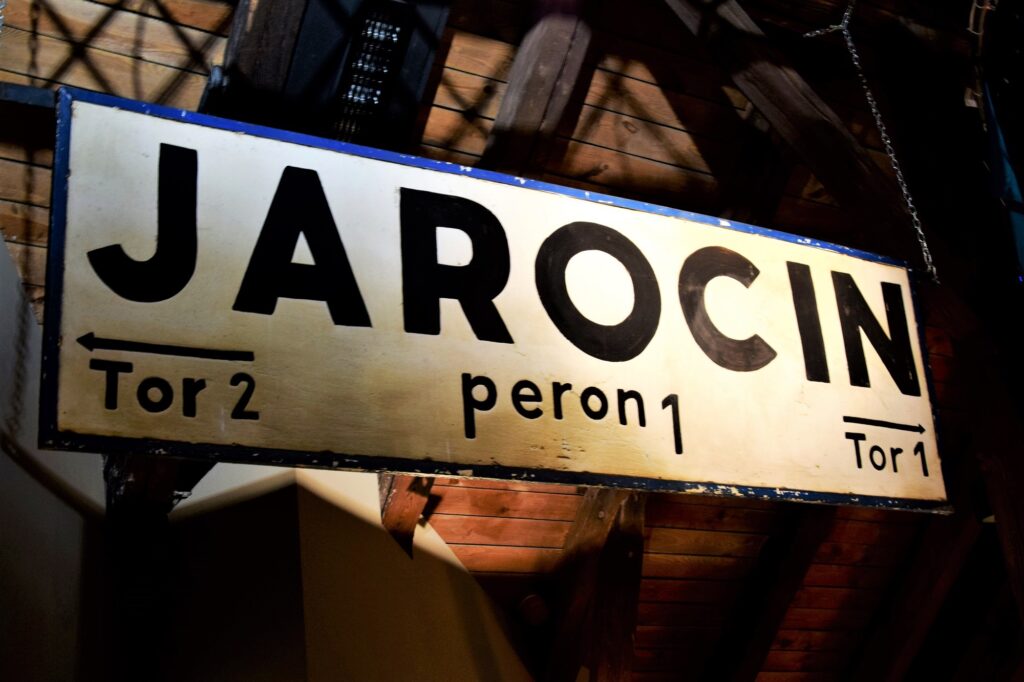

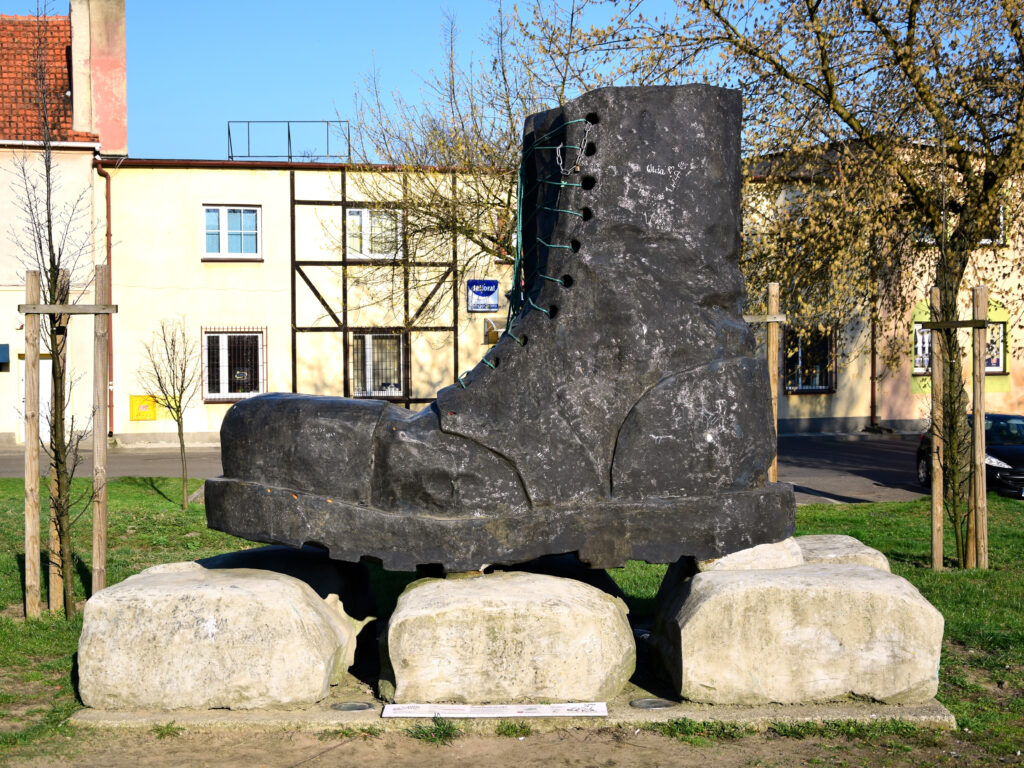
Jarocin’s rock spirit doesn’t stop at the museum, though. One of its most unique sights is what might be the world’s only monument to the combat boot (glan)—the heavy-duty footwear emblematic of various subcultures and a true festival icon. The town is also bursting with striking rock- and youth-rebellion-themed murals, many created by renowned street artists. You’ll easily need more than an hour just to hunt them all down!
Jarocin through the centuries
Jarocin’s history goes back way further than its rock festival. Nestled in the heart of the city park stands the splendidly restored Radoliński Palace, home to the noble family that owned Jarocin for generations. Today, the palace houses a museum telling the story of the town, along with an interactive science center. Nearby, still within the park grounds, lies another historic gem from the Radoliński era: the charming little treasury known as the Skarbczyki.
From the park, it’s just a short stroll to the town square (Rynek), dominated by an eye-catching town hall. It’s a bit unusual because it lacks a tower—which is why the soaring white spire of nearby St. Martin’s Church peers gracefully over the rooftops of the old townhouses. While in the market square, be sure to drop by Kamienica Kultury, which houses the local tourist information center. Heading south from the square, ulica Wrocławska (a partially pedestrianized street) offers a lively strip lined with cozy restaurants.
On the edge of the park sits the former Church of the Holy Spirit. Once a hospital chapel, it is now a picturesque ruin cleverly converted into a atmospheric venue for concerts and theater performances.
Poland’s oldest wooden church
Just past the town limits of Jarocin, in the village of Golina, stands the Church of St. Andrew the Apostle—currently recognized as the oldest wooden church in Poland. Recent dendrochronological research dates its oldest sections back to 1335, right around the beginning of King Casimir the Great’s reign. What makes it truly unique in Poland is its construction from massive oak timber harvested from trees that were 250 to 300 years old at the time—meaning the wood itself is almost as old as the Polish nation!
Golina is also famous for keeping alive the traditional art of snutka golińska, a delicate form of local embroidery. Similar to lace, it is stitched onto white linen fabric. Once the pattern is completed, the embroiderer meticulously cuts away the background cloth, leaving only the intricate, suspended threads forming the motif. (The name comes from nasnuwanie—meaning the layering or spanning of threads). A large-scale mural in the village celebrates this unique regional craft.
Dobrzyca Palace
About a 30-minute drive from Jarocin lies Dobrzyca, famous above all for its stunning palace estate. Today, the palace houses the Museum of the Landed Gentry (Muzeum Ziemiaństwa).
The ground floor features beautifully restored, fully furnished residential and reception rooms. Moving upstairs, your eyes will be drawn to the lavishly decorated ballroom, the exotic Egyptian room, and a charming salon adorned with cute cupids.
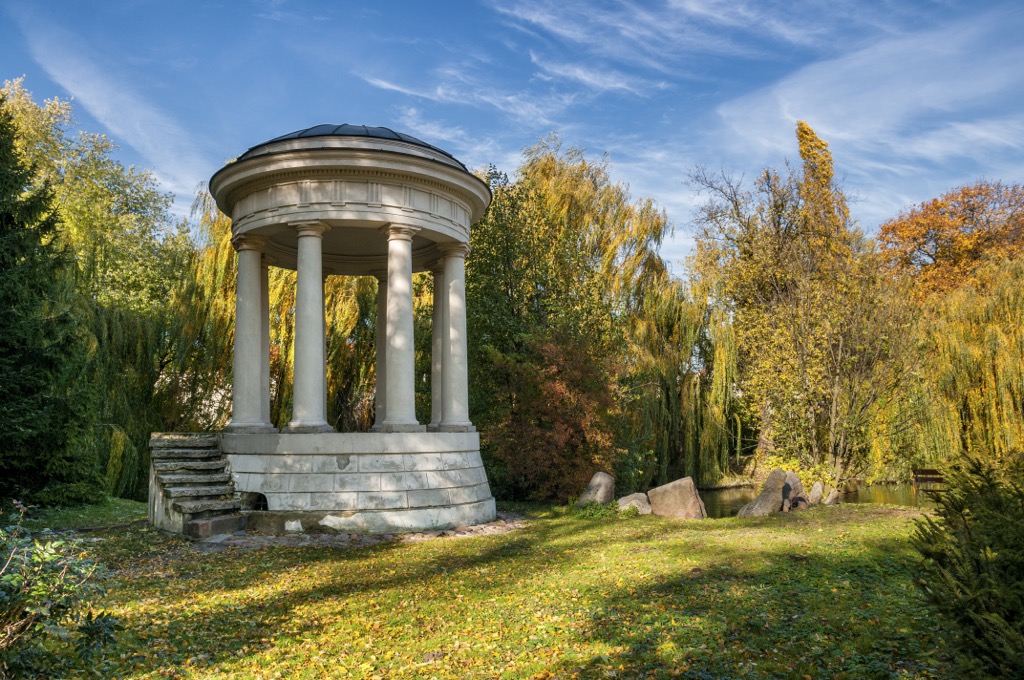
Surrounding the palace is a magnificent English-style park traversed by the gentle Potoka stream. Beyond its manicured greenery, the park is filled with architectural delights—including a romantic monopteros, a replica of the Roman Pantheon, and a grand orangery. You can also explore an artificial grotto and a peacock enclosure. Fun fact: a super friendly, social goose residing near the palace once became a genuine internet sensation!

Żerków Switzerland (Szwajcaria Żerkowska)
Just north of Jarocin stretches the most ecologically valuable landscape in the area: the Żerków-Czeszewo Landscape Park (Żerkowsko-Czeszewski Park Krajobrazowy—yes, a bit of a tongue-twister!). Thanks to its rolling hills and picturesque vistas, it’s often fondly dubbed “Żerków Switzerland.” It’s a gently forested, undulating terrain carved out by the scenic valleys of the Warta and Lutynia rivers.
The park’s true gems are its oxbow lakes and lush riparian woodlands along the Warta River, preserved within the Czeszewski Las Nature Reserve—the very first nature reserve established in Wielkopolska back in the early 20th century.
For breathtaking panoramic views of the countryside, head up the observation tower in Wolica Kozia or visit the viewpoint in Brzostków. From Brzostków, you can easily spot the gleaming white façade of the Śmiełów Palace, home to the Adam Mickiewicz Museum.


Śmiełów Palace
This classical palace was built in 1797 for the Gorzeński family by Stanisław Zawadzki—the very same architect behind the palace in Dobrzyca. The interiors are lavishly decorated; the Smuglewicz brothers were commissioned to paint frescoes inspired by ancient Roman villas uncovered in Pompeii. The owners were also active Freemasons, and hidden beneath the main salon in the basement is an octagonal chamber once used for secret lodge meetings. Look out, too, for the intriguing “Masonic altar” set into the staircase.
Today, Śmiełów Palace operates as the Adam Mickiewicz Museum. But why would a famous poet traditionally associated with Lithuania have a museum in Wielkopolska? Mickiewicz stayed here during the winter of 1831–1832, trying to cross the border to join the November Uprising against Russian rule. Ultimately, he didn’t make it across—whether halted by strict border patrols or swept up in the sparkling high-society life of the local salons, no one knows for sure! One thing is certain: the stunning landscapes he witnessed here stayed with him for the rest of his life and inspired passages in his epic poem Pan Tadeusz (even if he shifted the setting back to Lithuania).
In addition to numerous personal keepsakes, the collection includes fascinating oddities like a library ledger from Mickiewicz’s school days and handwritten letters. Since Mickiewicz was essentially a 19th-century celebrity, you’ll also see plenty of commercial items stamped with his likeness to boost sales!
Miłosław
The name Miłosław might ring a bell for beer enthusiasts—and for good reason! The town is home to a historic 19th-century brewery that still crafts traditional dark beer using time-honored recipes and open fermentation vats. This specialty is officially listed on Poland’s Ministry of Agriculture’s Traditional Products List.
But there’s much more to Miłosław! The town boasts an elegant palace designed by Karl Friedrich Schinkel for the Mielżyński family. During the era of foreign partitions, it served as an important cultural salon where top Polish writers and artists gathered. Today, the palace houses a school and can only be viewed from the outside, but the surrounding park—featuring a fine monument to poet Juliusz Słowacki—is well worth a stroll.
Winna Góra Palace
A great way to start the story of this village is its name: Winna Góra translates literally to “Vineyard Hill,” hinting at the region’s long-forgotten winemaking history in Wielkopolska centuries ago!
However, what makes this place truly special is its historic palace and its famous former owner: General Jan Henryk Dąbrowski—the national hero immortalized in the title and lyrics of Poland’s national anthem (Dąbrowski’s Mazurka). Emperor Napoleon gifted Winna Góra and its surrounding towns to the general. While the palace standing today was built later, Dąbrowski’s legacy remains vibrantly alive.
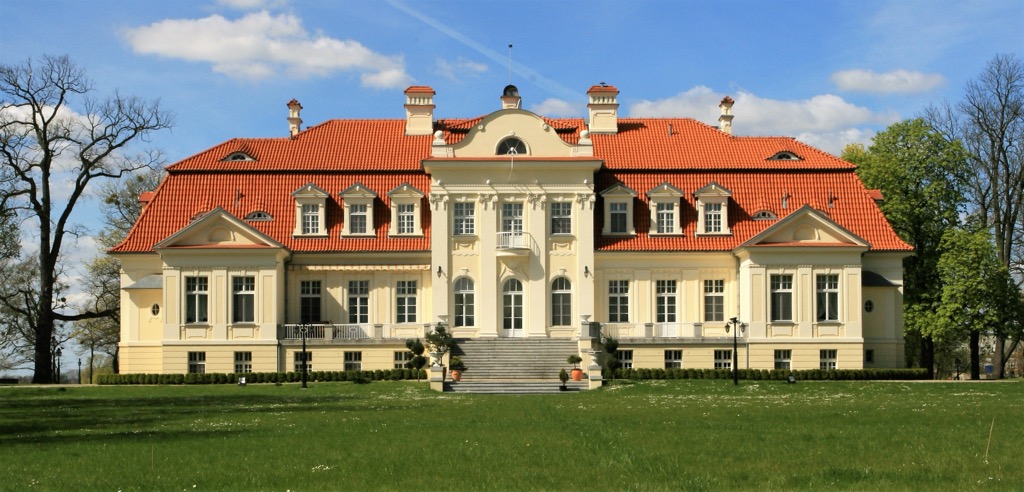
In 2021, Winna Góra Palace became a dedicated cultural center run by the regional government of Wielkopolska, operating as a heritage interpretation site. Its flagship project is the Organic Work Trail (Szlak Pracy Organicznej), designed to promote the 19th- and early 20th-century socioeconomic, educational, and patriotic movements that shaped Wielkopolska.
Środa Wielkopolska
Środa District Railway (Średzka Kolej Powiatowa)
We start the final day of our weekend trip by heading slightly north to Środa Wielkopolska, one of the region’s major county towns. Without a doubt, its star attraction is the Średzka Kolej Powiatowa steam railway.
This is one of the last remaining narrow-gauge railways in Poland where you can ride vintage carriages pulled by a real, huffing steam locomotive! Billowing clouds of steam, the hiss of the brakes, and the sharp whistle of a conductor dressed in a retro uniform create an unforgettable nostalgic vibe.
Although the original rail network was once much broader, 14 kilometers of track have survived—just enough for a wonderfully romantic journey powered by steam.
The ride from Środa Wielkopolska to Zaniemyśl takes about an hour. The layover at Zaniemyśl station gives you plenty of time to grab an ice cream or a pastry at a local bakery before hopping back on board for the return journey. Everything along the line feels charmingly retro—from the staff uniforms and station signs to the traditional cardboard tickets!


Zaniemyśl
Right near the route of the steam railway lie two more attractions well worth your time. The first is Edward’s Island (Wyspa Edwarda) in Zaniemyśl. Count Edward Raczyński built his summer residence here—and ultimately met a dramatic end on the island by firing a cannon at himself! Today, the island is a peaceful recreation spot featuring a beach, boat rentals, and several excellent restaurants.
The second highlight in the area is Browar Gzub in nearby Annopol. It’s not just about fantastic craft beer! They feature an all-season beer garden and their own campground. You can take a tour of the brewery or join in one of their frequent beer-themed events.

Historic Środa
Środa Wielkopolska boasts a fascinating history and a charming market square. Look out for three modest little houses standing side-by-side, dwarfed by the massive collegiate church next door. They are tangible relics of the town’s grand history: for several centuries, Środa hosted the sejmiki (regional parliamentary assemblies of the Wielkopolska nobility). The nobility gathered inside the grandest building around—the collegiate church—while the senators attending the sessions resided in these quaint houses.
Koszuty Manor House
Right along Route 11 between Środa Wielkopolska and Poznań lies a spot you simply cannot skip: Koszuty Manor (Dwór w Koszutach), home to the Museum of the Środa Region. It offers a captivating window into how a moderately wealthy landed-gentry family lived at the turn of the 20th century.
Stepping inside feels as though the owners have just stepped out for a moment and will be right back. The rooms are fully furnished with authentic period pieces to create the intimate atmosphere of a lived-in noble manor. You can wander through the entrance hall, dining room, guest parlor, main salon, master bedroom, lady’s room, and children’s quarters—all filled with everyday items from a century ago. Reading glasses and a newspaper rest on the desk, while vintage cosmetics line the vanity table.
Up in the manor’s attic, an exhibition traces the history of the Środa land from the start of the partitions up through the Wielkopolska Uprising and Poland’s return to independence.
For a Longer Stay
What if you want to extend your visit beyond a quick weekend trip? If you have extra time, there are even more fantastic places to explore near Jarocin and Środa Wielkopolska!
Gołuchów Castle
It takes a few dozen minutes to drive from Jarocin to Gołuchów, but it is worth every second—Gołuchów Castle is easily among the most magnificent and beautiful strongholds in all of Wielkopolska. You’ll want to set aside at least half a day to explore both the castle and its surrounding park.
With its delicate grace and lavish detailing, this residence looks as though it was plucked straight out of the French Loire Valley. And that’s no coincidence! The redesign plans for the old castle were drawn up by French architect Eugène Viollet-le-Duc, renowned for restoring Notre-Dame Cathedral in Paris and the medieval ramparts of Carcassonne. The visionary behind the project was Countess Izabella Działyńska (née Czartoryska), a grand patron of the arts.
Inside, the castle functions as a branch of the National Museum in Poznań, housing Izabella Czartoryska’s impressive art collection—including Poland’s largest collection of ancient Greek vases.
Surrounding the castle is the largest palace park in Wielkopolska, boasting around 600 species of trees and shrubs. The park also houses the Forest Culture Center, managed by the Polish State Forests. Museum displays are showcased throughout former estate buildings—including the outbuilding, sheepfold, coach house, and cow barn. However, the biggest crowd-pleaser for visitors of all ages is the bison demonstration enclosure!

Krotoszyn
Located in southern Wielkopolska, close to the border with Lower Silesia, Krotoszyn is a town where traces of its medieval founding blend seamlessly with grand architecture from its rapid late 19th-century expansion.
A walking tour naturally begins in the town square, home to one of the prettiest town halls in Wielkopolska. Take a moment to look around the plaza—the surrounding townhouses are grand, beautifully decorated, and surprisingly impressive.
From the market square, take ulica Farna to the Basilica of St. John the Baptist. Built in the late 16th century in the Gothic style, it is likely one of the very last Gothic structures built in Wielkopolska. A much humbler, yet equally fascinating place of worship is the small wooden Church of St. Fabian, St. Roch, and St. Sebastian, which originally stood outside the town limits as a hospital chapel.
Don’t forget to take a stroll through the municipal park, where you’ll spot a lovely mini-palace that once belonged to the lords of the town and surrounding estates.

Sulmierzyce Town Hall
A few kilometers outside Krotoszyn lies Sulmierzyce. Standing in striking contrast to Krotoszyn’s grand masonry town hall, Sulmierzyce boasts Poland’s only surviving wooden town hall. Built in 1743, its year of construction is still proudly displayed on the metal weather vane atop the town hall tower!