The festival in Jarocin is today considered a legend in Poland, comparable to what Woodstock or Roskilde represent in other countries. During the communist era, it was one of the few places where truly good music could be heard. For this reason, there is no better place to explore the history of Polish rock – from its modest beginnings with tidy suits to punk rock, combat boots, and total rebellion.

As you enter, the first surprise awaits. On the ground floor, there is no exhibition – only a ticket office, a bar serving beer and snacks (also open outside exhibition hours), and a stage where young talents regularly perform.
Stairs lead to the first and second floors, where the journey through time begins: from the early 1950s and Polish big beat to the late 1990s. The first thing you will see is a wall mapping installation featuring Mick Jagger’s lips. The exhibition covers not only the famous bands but also the history of the festival itself. Visitors can view newspaper reprints, original posters, video recordings, and even a section of the footbridge over the tracks, once crossed by thousands of festival-goers.
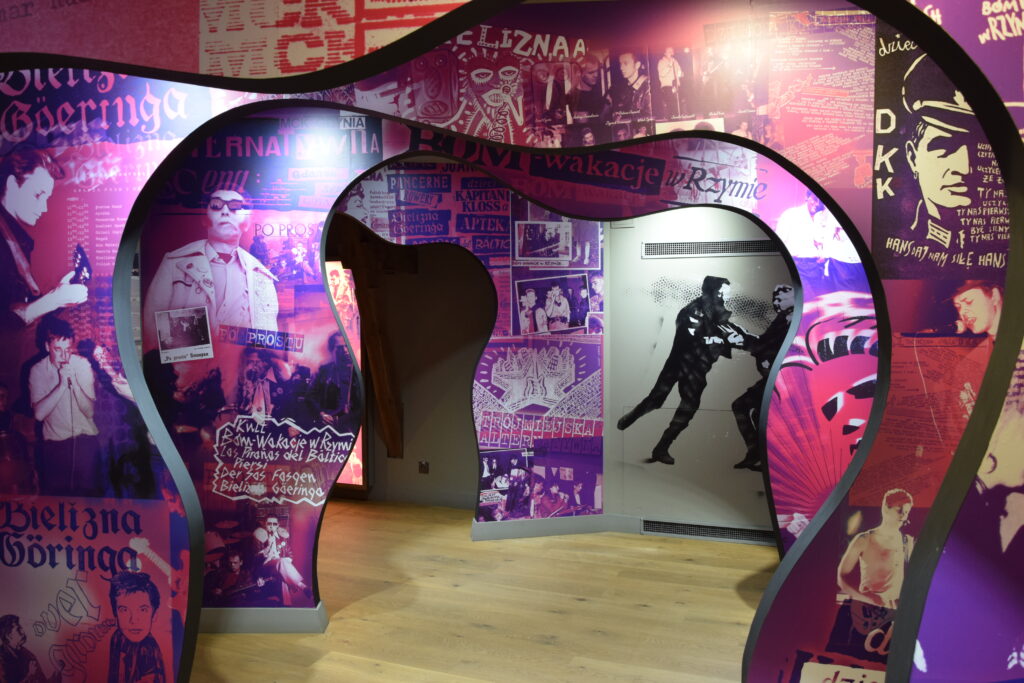
The Granary of Polish Rock also organises workshops for children – after all, not everyone today knows what a cassette tape is.
And why ‘granary’? The building is in fact a former grain house, once located on the outskirts of Jarocin.