How does a traction engine work, what did a carriage-builder do, and what was the purpose of a frame feeder? You’ll find answers to these and many other questions in the National Museum of Agriculture in Szreniawa. This place is even more interesting during numerous events, when you can observe the customs of the old village or see historic equipment at work.
The museum consists of more than a dozen pavilions, many of which are former farms and manor buildings. At the entrance guests are greeted by a large steam-powered traction engine, the ancestor of today’s tractors.
The machinery, which includes tractors, combine harvesters, narrow-gauge locomotives, and even airplanes, is the most exciting part of the museum. A real rarity here is the M-15 Belphegor, the only agricultural jet aircraft. According to the urban legend, it was kept in secret and was supposed to be used as a chemical weapons carrier during the Cold War. A separate pavilion houses the Tarpan Museum, the largest collection of agricultural vehicles produced in Poznań (the Polish equivalent of the classic pickup truck on the American prairie).
Children always find the most joy in the live animal pavilion, where they can encounter cows, sheep, a donkey, pigs, and, during the Easter season, little yellow chicks. They are also always attracted by historic beehives, carved in the shapes of people and animals.

Museum Events
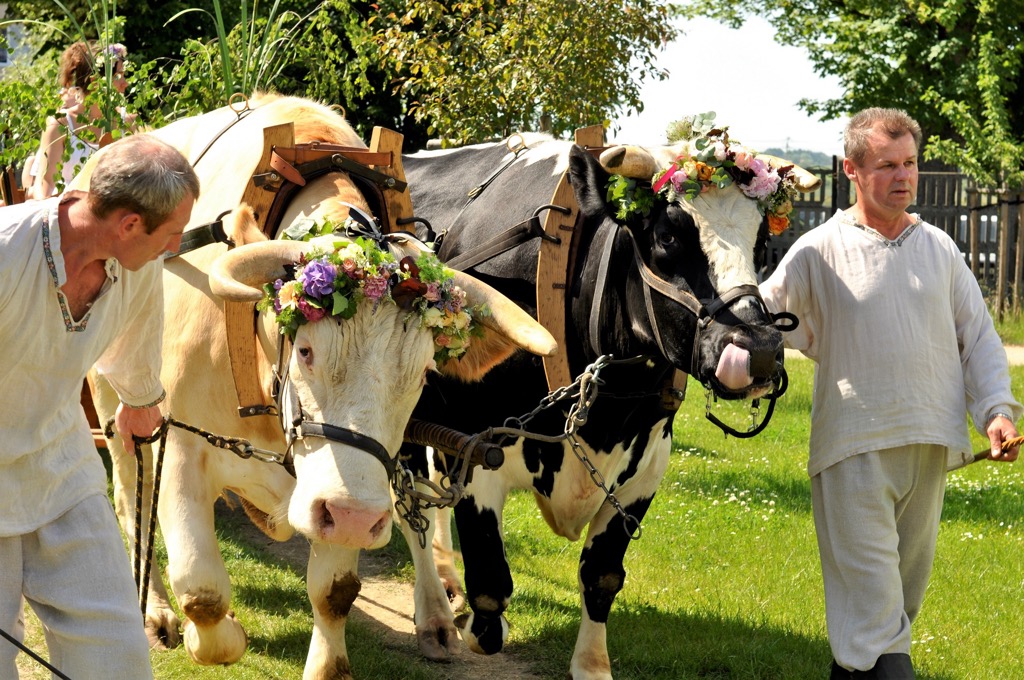
The Museum of Agriculture in Szreniawa organizes numerous outdoor events, and its calendar is full practically all year-round. The season begins in March with the Easter Market. In May, the museum hosts the Bee Day and the Beer with Culture festival (the museum also operates its own brewery). Summer is the time for the Pentecostal Festival. Next, this season is ended with the Poznań Pyra Festival( pyra is a regional word for a spud, typically from Poznań). In December, the museum invites you to the Christmas Market.

Observation Tower
A few hundred meters away from the museum ticket office is the Bierbaum Tower. Its’ name comes from the former owners of the estate. It was built as a family mausoleum and chapel. Today, it primarily serves as an observation tower, offering a beautiful panorama of the Greater Poland National Park.