Jeżyce is one of Poznań’s three historic districts located just outside the strict city center, alongside Łazarz and Wilda. Although it wasn’t officially incorporated into the city limits until 1900, the history of this neighborhood (or fyrtiel, as locals call it) goes back much further, and its impact on Poznań’s urban folklore is absolutely massive.
After all, this is the setting of Małgorzata Musierowicz’s famous Jeżycjada book series, the birthplace of the legendary Poznań rapper Peja, a place packed with remnants of the historic Bambrzy settlers, and the ultimate go-to spot for finding unique, cozy cafes and restaurants.
The Bambers
This area used to be the beating heart of old Jeżyce. Back in 1719, the first “Bambrzy”-German settlers from Bamberg (now in Bavaria)-moved to this very spot. They were invited by the city authorities to rebuild and repopulate suburban villages that had been left deserted after devastating wars and epidemics.
The Bambrzy left behind plenty of fascinating history. Most notably, you can check out a beautifully preserved homestead on Kościelna Street, and a second, slightly more weathered one on Dąbrowskiego Street. Along Dąbrowskiego Street, you’ll also spot an old wayside cross, the area’s first village school, and a timber-framed building that is often pointed out as the former post office.
Even the local church was built on historic Bamber land. Officially named the Church of the Sacred Heart of Jesus and St. Florian, most locals will simply refer to it by the name of the patron saint of firefighters. Completed in 1906, this impressive church boasts a stunning Neo-Romanesque style.

A Zoo at the Train Station
Jeżyce is also home to one of Poznań’s two zoological gardens. Today, the so-called “Old Zoo” operates as a publicly accessible park where you can meet animals like goats, donkeys, sheep, zebu, and various ornamental birds. There is also a primate pavilion, a lemur enclosure, and a coldblooded animal pavilion housing exotic snakes and even a Komodo dragon.
But the coolest part? The zoo didn’t just open on the grounds of Poznań’s very first railway station-it actually started completely by accident!
A local bowling club used to meet at a restaurant located inside the old train station. For his 50th birthday, the club’s president received a rather unusual mix of gifts: a goat, a sheep, a miniature pig, a cat, a rabbit, a squirrel, a goose, a duck, a hen, a peacock, a monkey bought from traveling Gypsies, and a trained bear.
This quirky menagerie became the foundation of the future zoo, which officially began its professional operations in 1874.
The Townhouses of Jeżyce
Jeżyce is the perfect place for a lazy stroll where you don’t have to rush through a checklist of major tourist sights. Instead, you can just soak in the urban landscape, tilting your head up to spot beautiful architectural details and wandering into old courtyards whenever you get the chance.
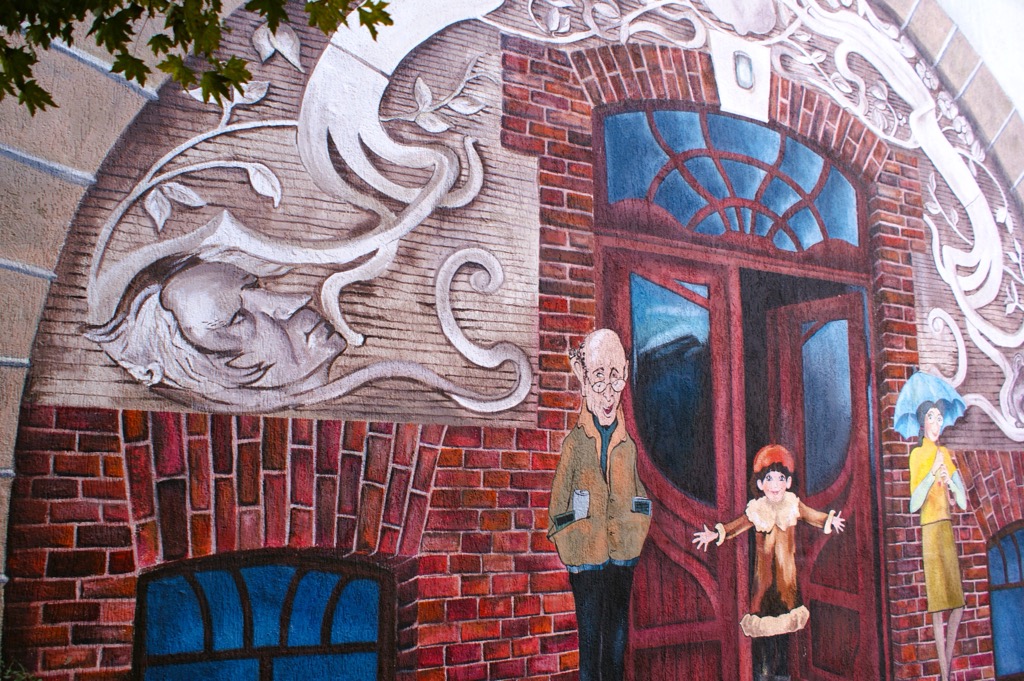
Keep an eye out for how the architecture changes as you move through the neighborhood. On Mickiewicza Street, you’ll find elegant urban villas originally built for high-ranking officials and professors. Meanwhile, the areas around Dąbrowskiego, Kraszewskiego, Słowackiego, and Szamarzewskiego streets are filled with magnificent Art Nouveau townhouses that are beautifully regaining their former glory.
The most famous of them all is located at 5 Roosevelta Street-the iconic setting for the Jeżycjada novels. The public buildings here are just as striking. The most famous is Teatr Nowy (The New Theater), a stage known for its avant-garde performances, housed in a gorgeous building featuring a distinctive turret. You also can’t miss the Dom Tramwajarza (Tram Man’s House) with its eye-catching pink facade, or the massive ZUS building, whose modernist design was a source of fascination back in the 1930s.