One of the most distinctive and recognizable buildings in Złotów is the 18th-century, half-timbered town-house on Wojska Polskiego Street. That’s where the Złotów Land Museum is located, home to collections related to the town and its surrounding area.
The ethnographic section is particularly fascinating. It enables the visitors to get familiar with the culture of Krajna, the region where Złotów is located, where Wielkopolska meets Pomerania. Among the exhibits there is a painted chest from 1799. The bride used it to carry her dowry and wedding dresses, which, contrary to the contemporary fashion, were… black.

Local traditions
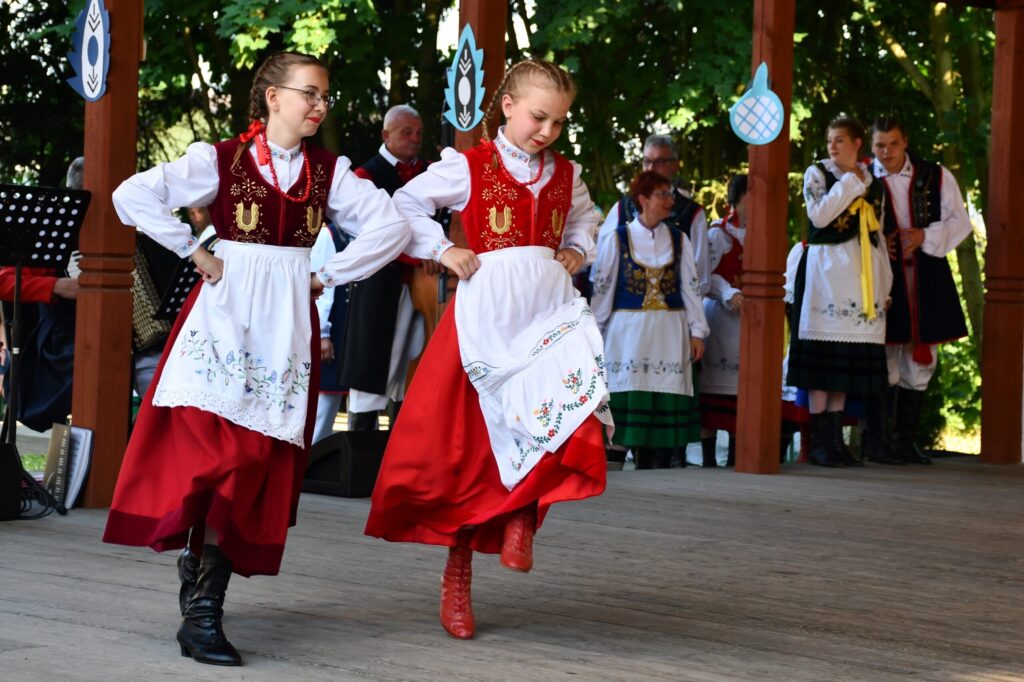
The Krajna embroidery is particularly noteworthy, characterized by its distinctive colors: sky-blue, blue, cornflower blue and black with recurring floral motifs. The folk art of Krajna reflects Kashubian, German, and Greater Poland influences.
Moreover, the Krajna embroidery motif has been imaginatively incorporated into the production of unique souvenirs from Złotów. These are not only napkins and decorations, but also hand-painted ceramics, jewelry, even cotton bags and exquisitely decorated gingerbread cookies. All of these are available for purchase in the museum shop.

Krajna farmstead
Located by the Złotów promenade, the Krajna Farmstead is a small open-air museum. It shows what farms in the Krajna region looked like in the late 18th century. It is also part of the Złotów Land Museum. Half-timbered architecture prevails here with its characteristic black and white checkered houses. The cottage was built in imitation of a dismantled farm, using original structural elements.